The Alchemist Archive
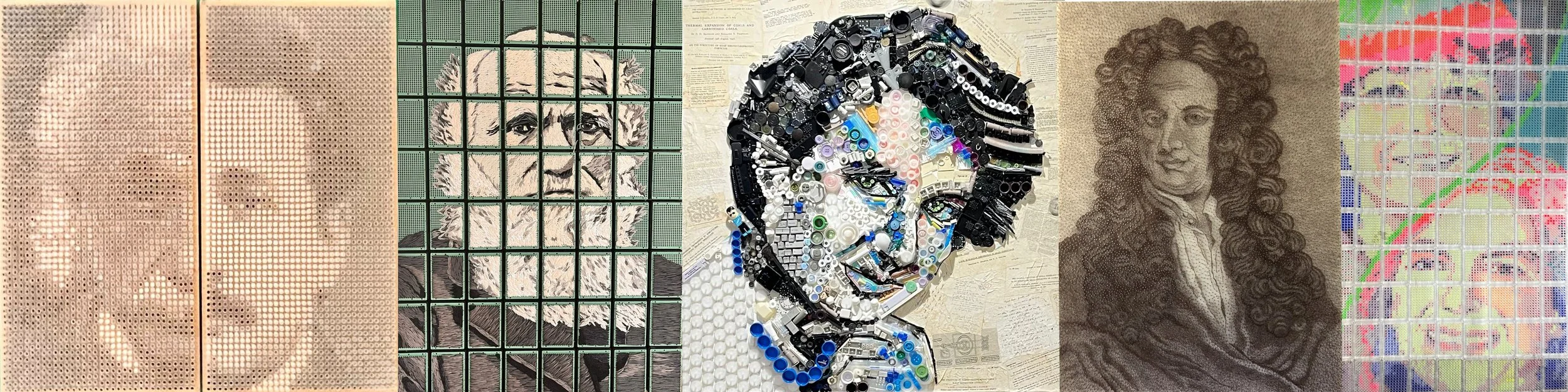
Over the last decade, I’ve created a series of five portraits that connect science with material sustainability. The works display both internationally known pioneers but also the less known ones.
Created primarily from repurposed laboratory waste and beyond, the series highlights the material of research and the human faces behind science.
Following a long-term residency at the ERIBA building in Groningen, these works were shown in a final exhibition where two pieces were acquired by private collectors. Three are still available.
The structural integrity of the Alchemist Archive were made possible through the technical expertise of Walid Daş. From advice for the most solid base to custom tools to make it physically possible to create.
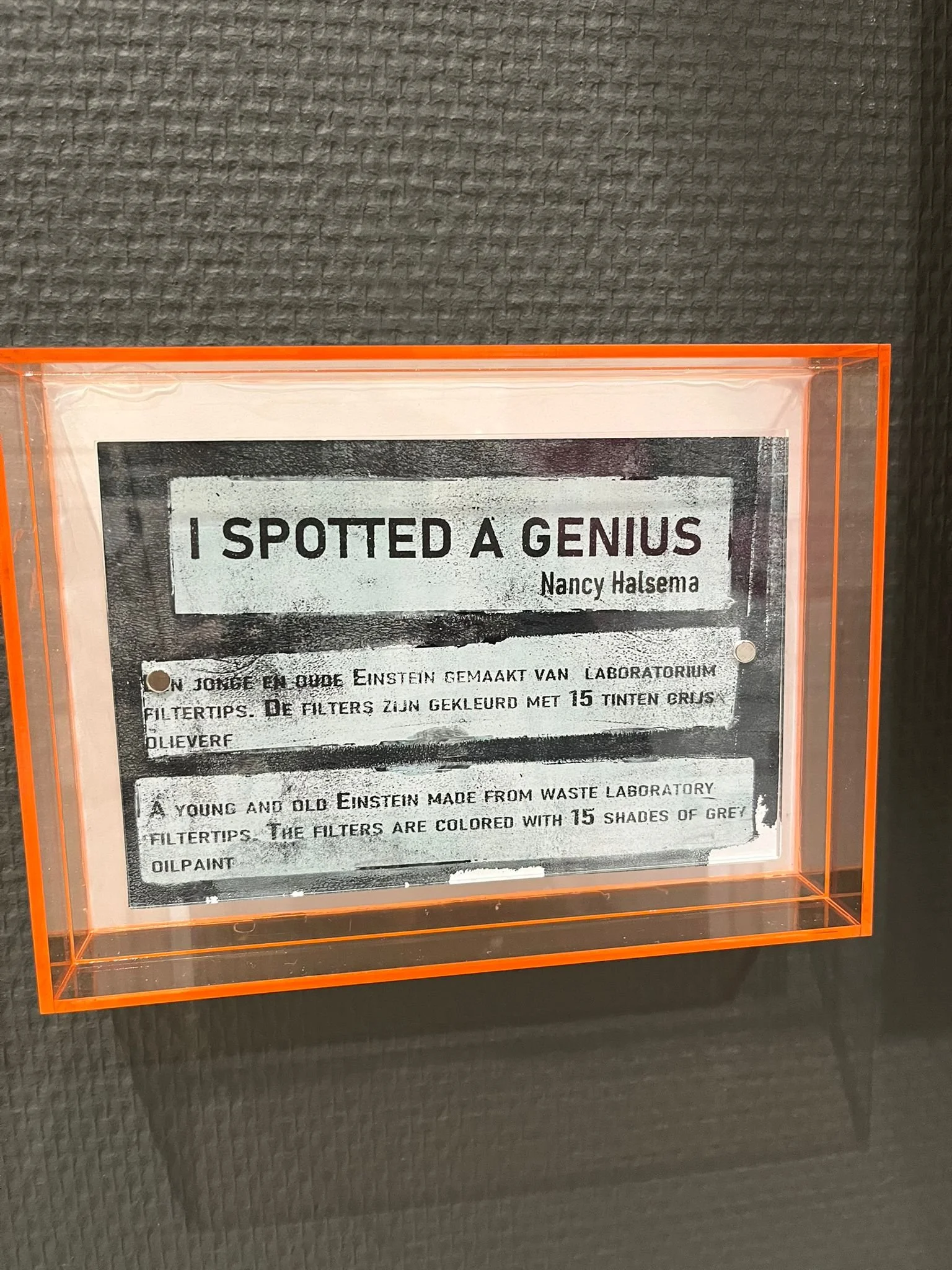
i Spotted a Genius
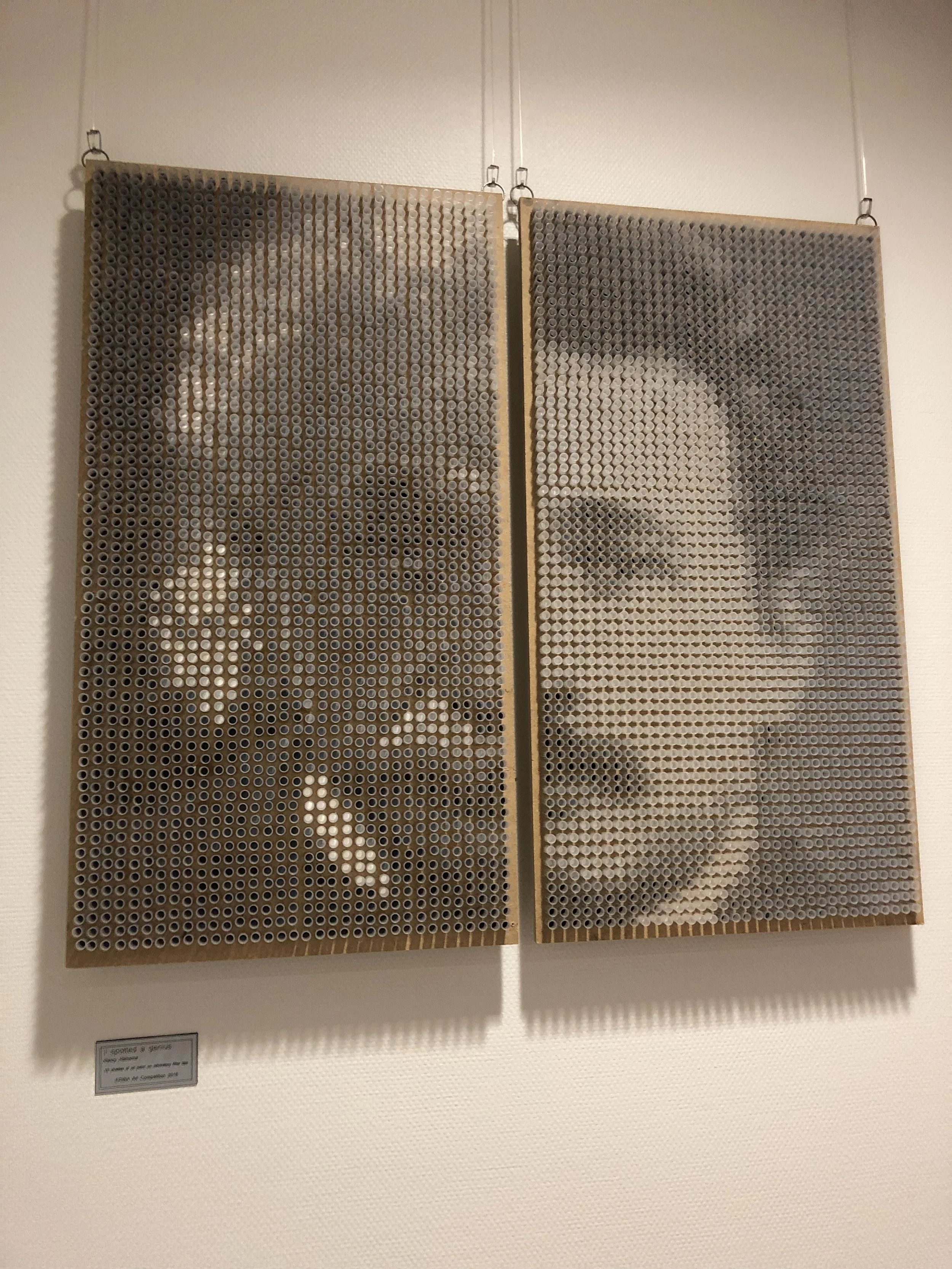
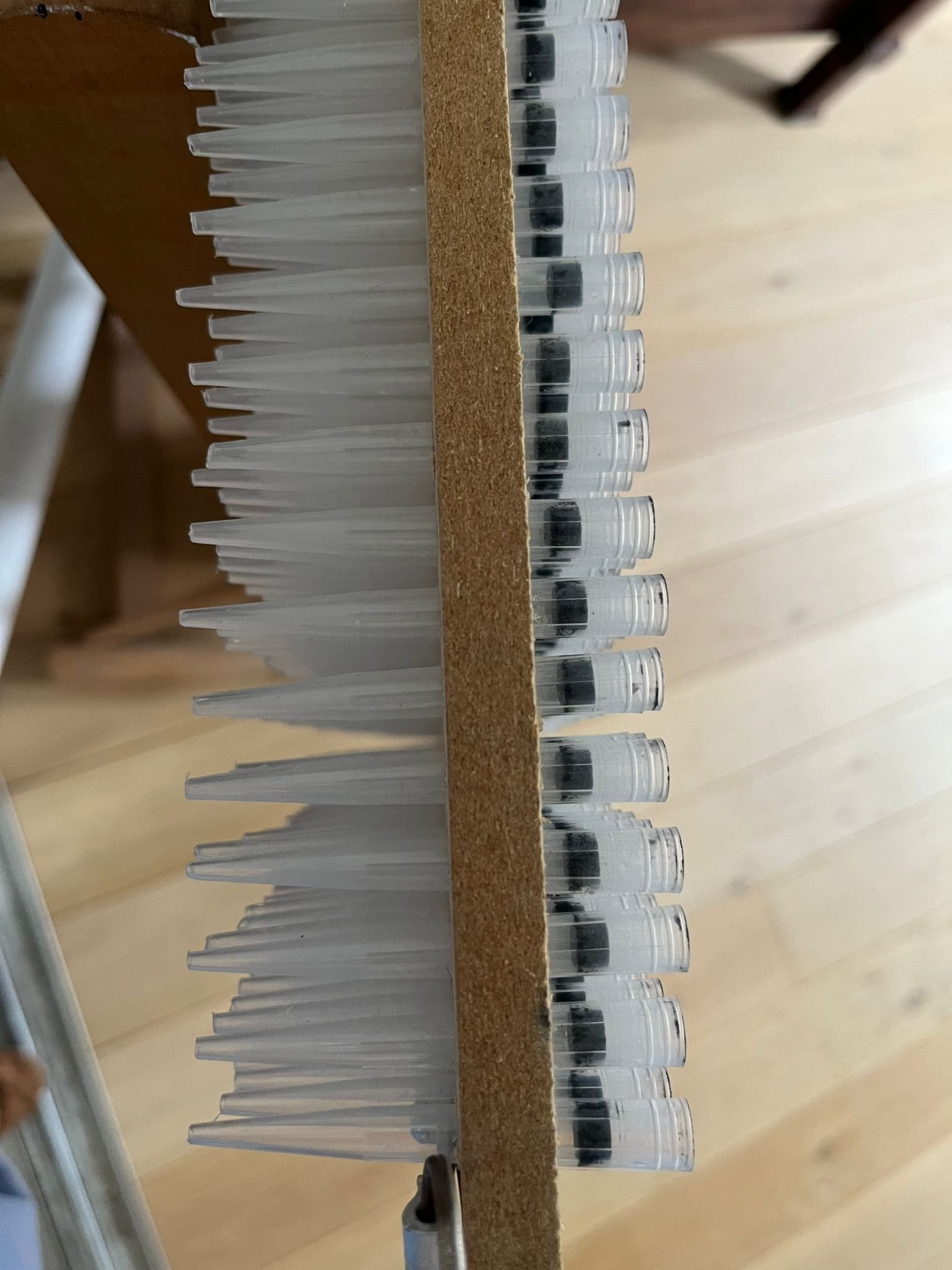
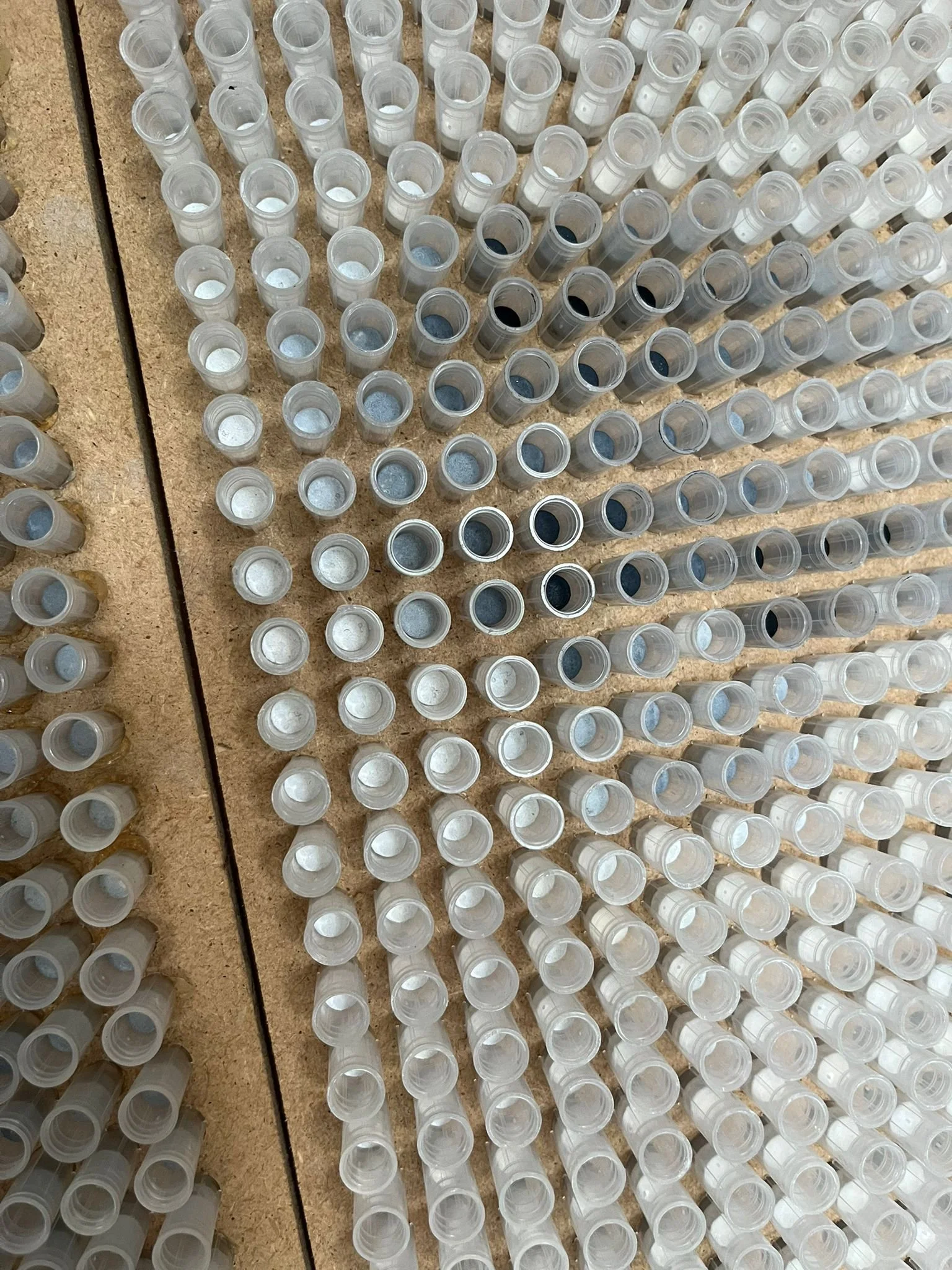
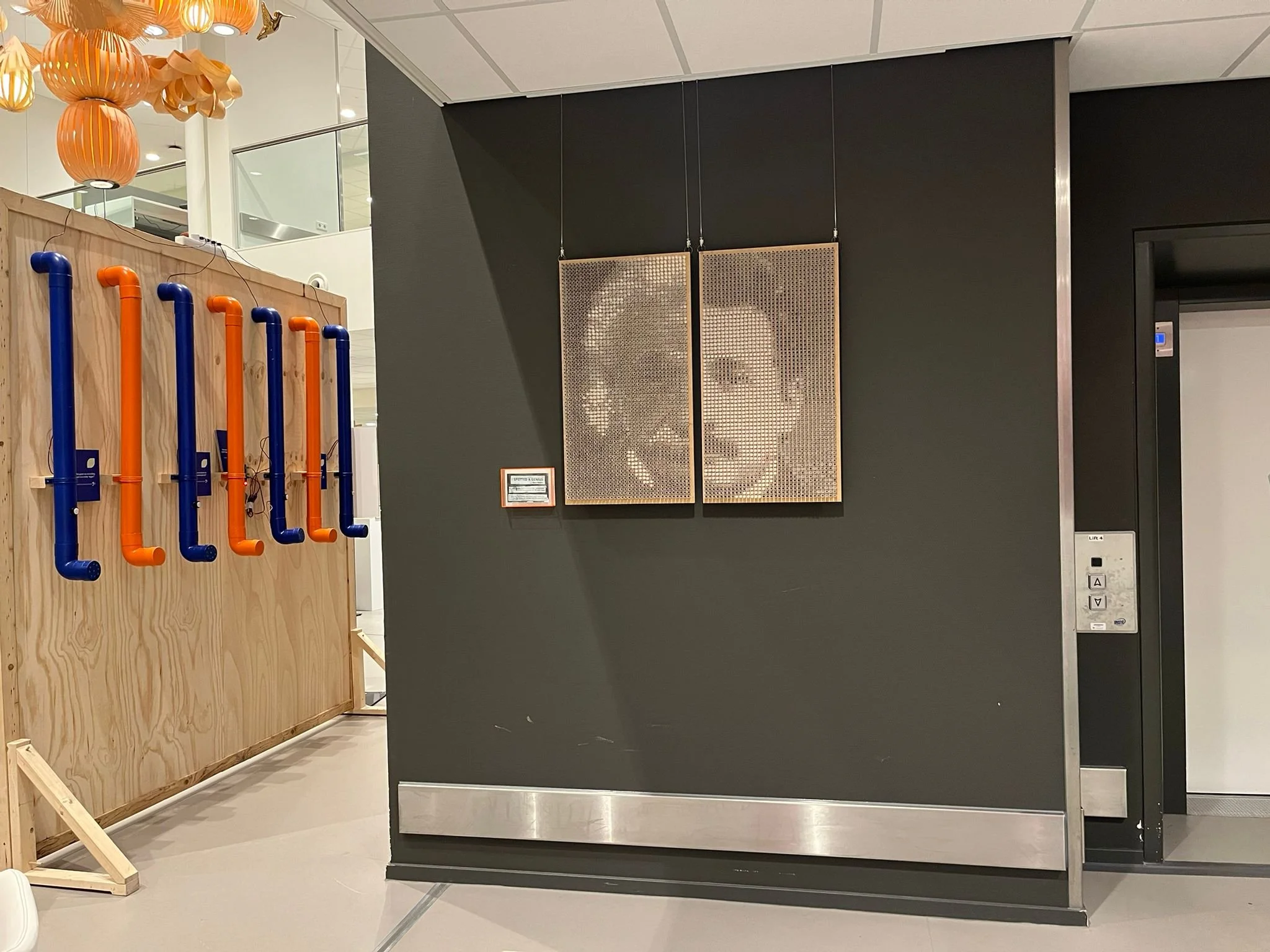
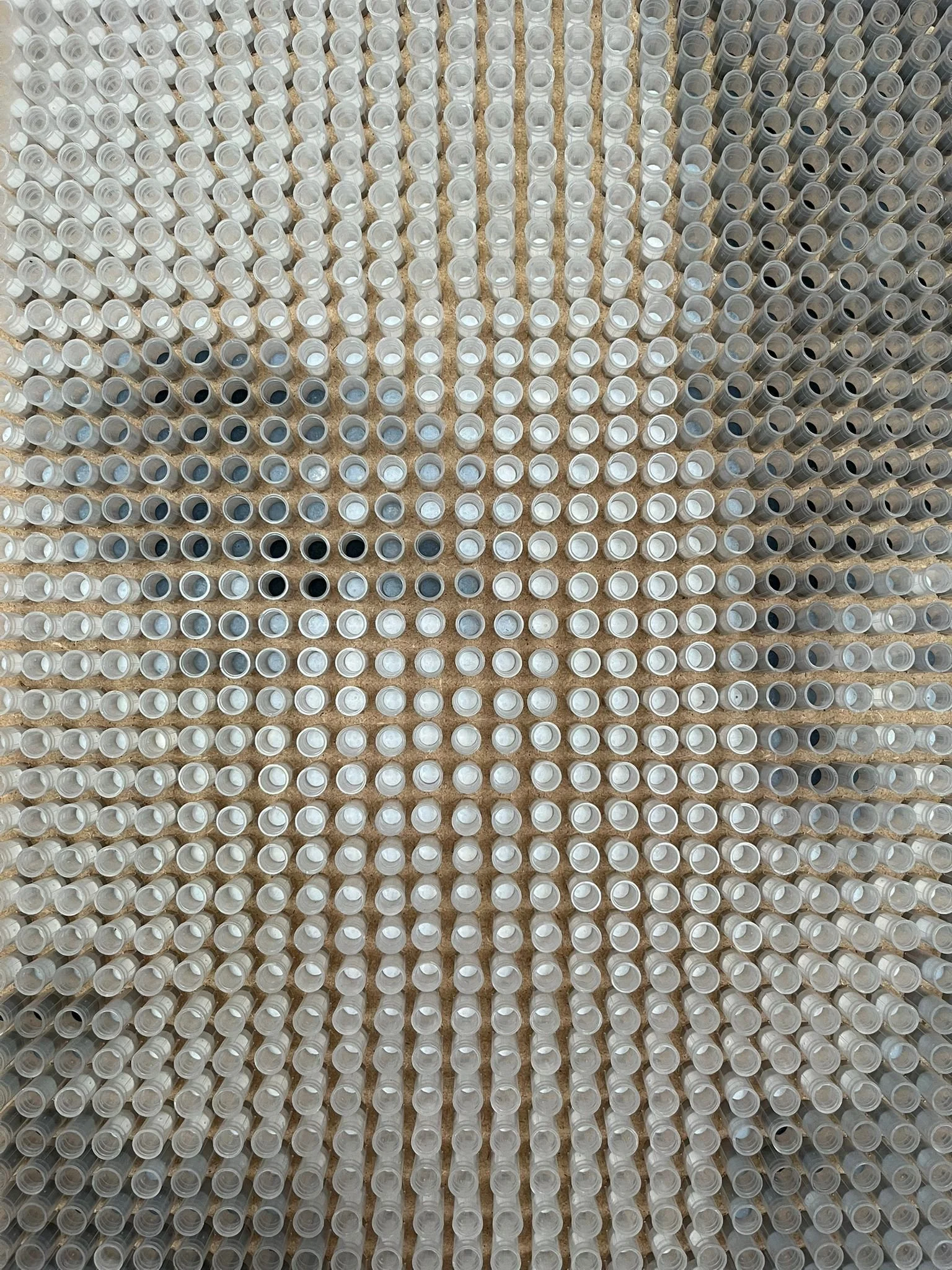
This portrait of Albert Einstein is a creation composed of over 4,000 disposable 1ml laboratory filter tips, each filter one-by-one deconstructed and hand-colored. Because the filters are highly hydrophobic, designed to repel liquids, I utilized fifteen shades of grey oil paint to create the face. Something that acrylics could not provide.
The composition reveals a dual side of the physicist: a young Einstein on the right and his older self on the left. This assembly was made possible by Walid Daş, whose precision was essential in drilling the 4,000+ holes to fit eacht filtertip.
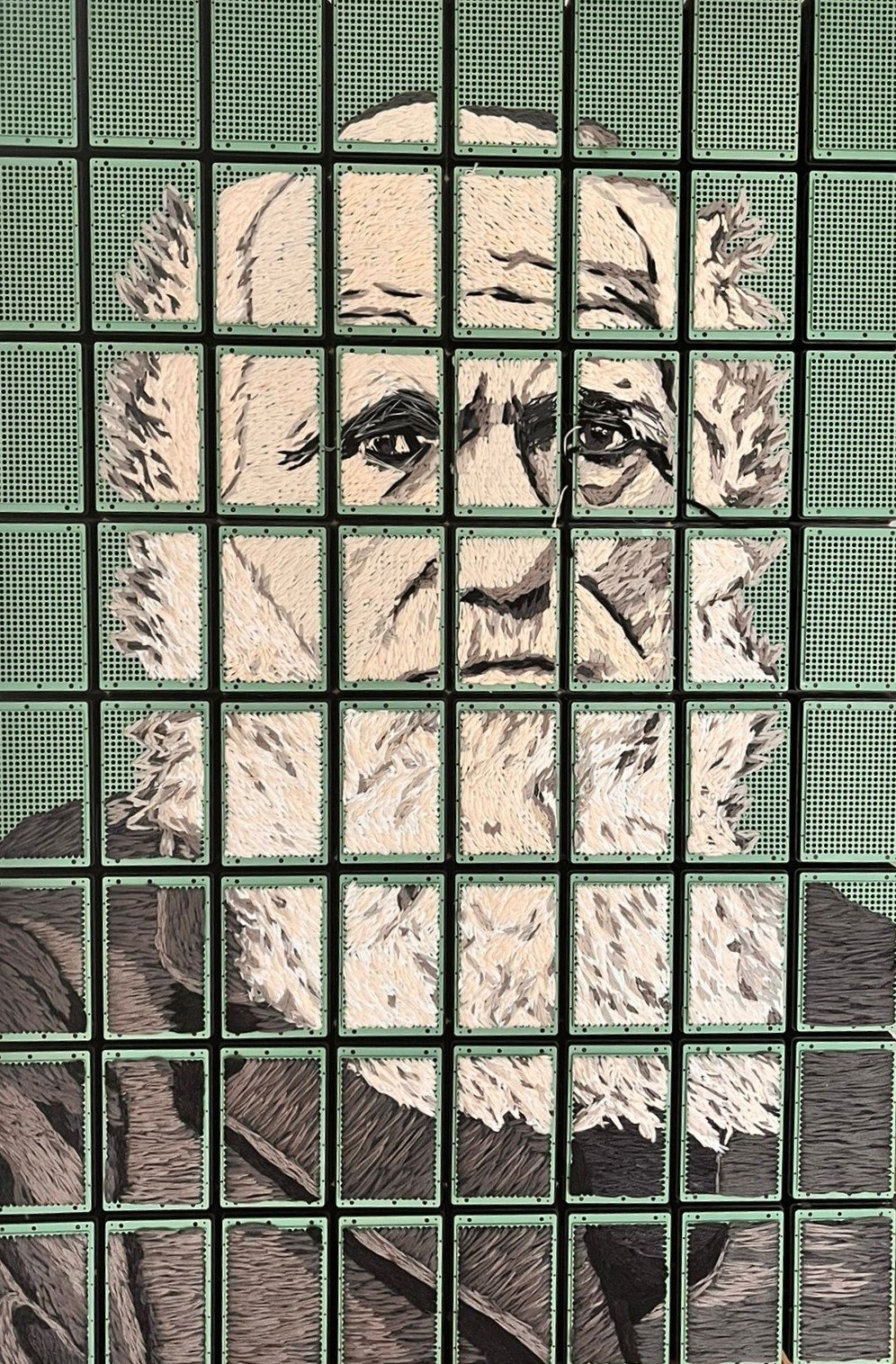
Evolutionary Thread
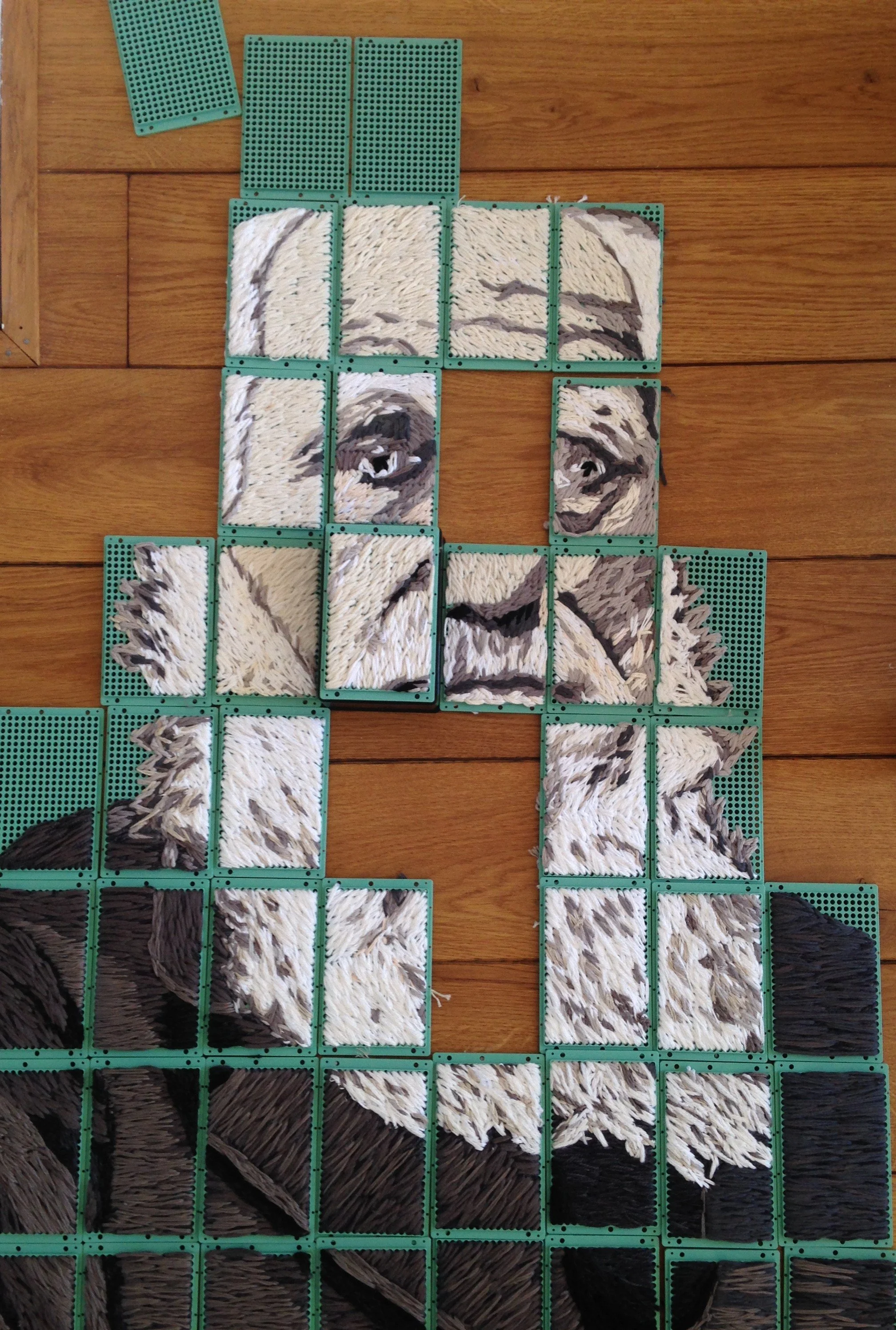
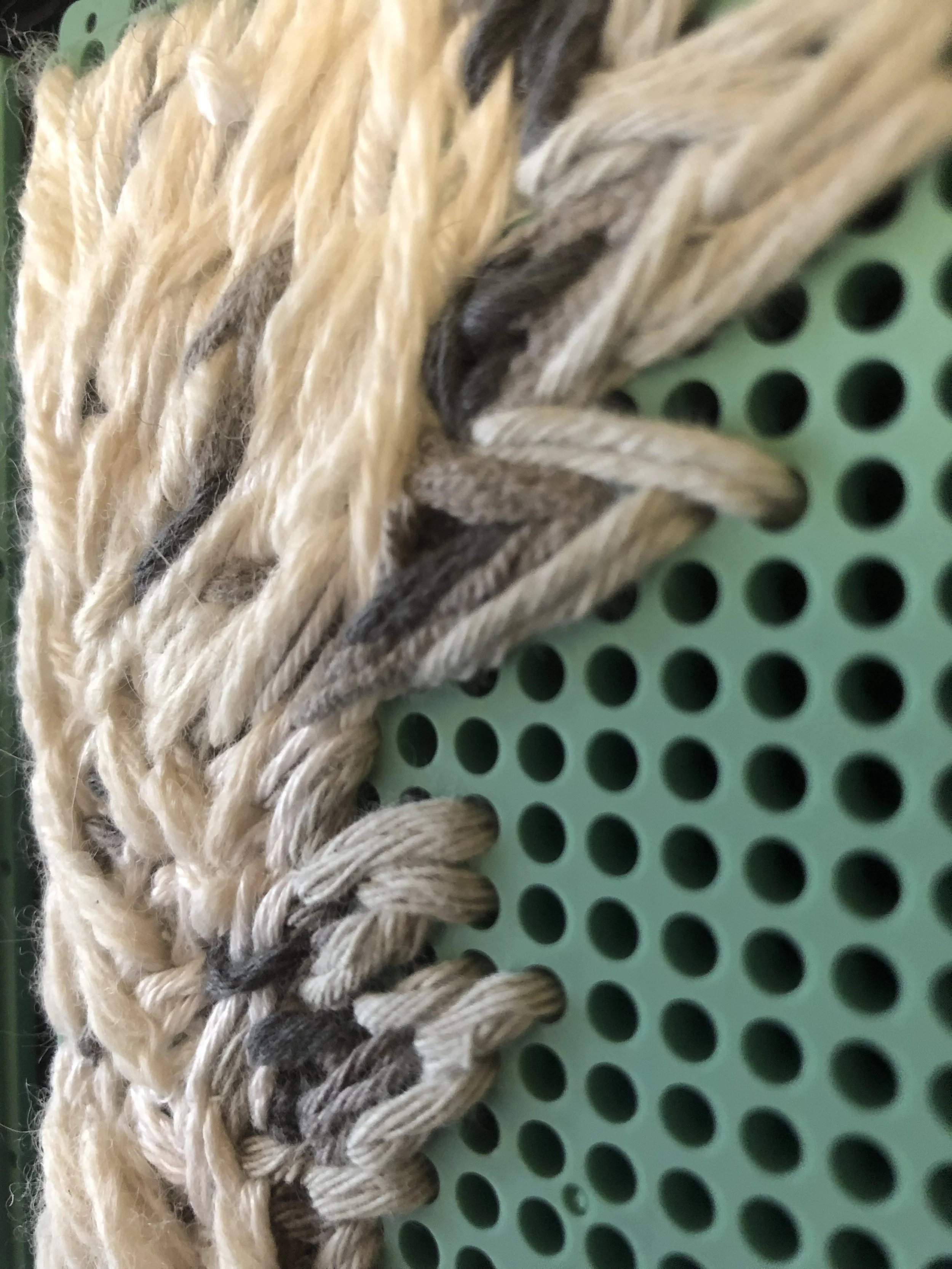
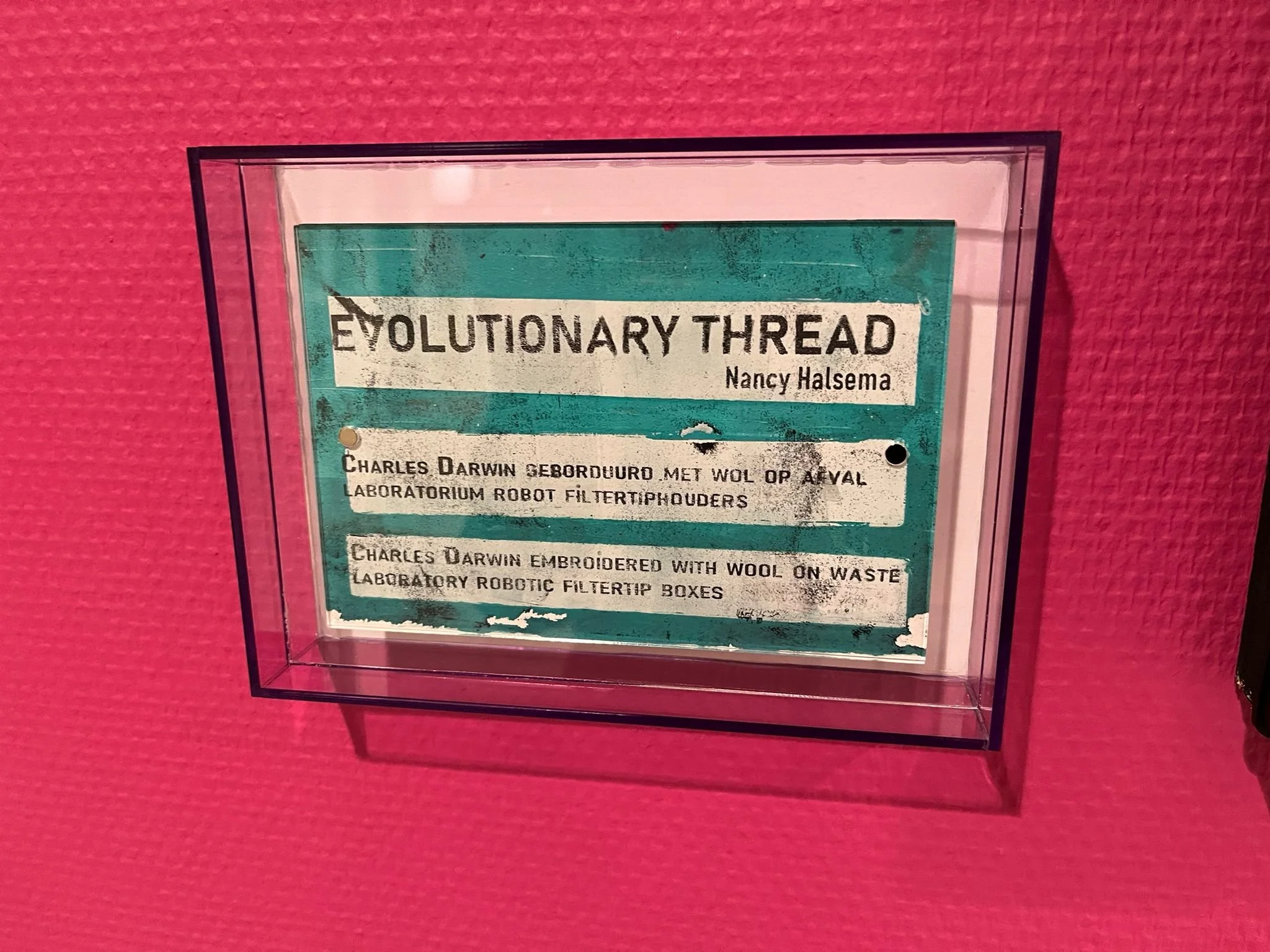
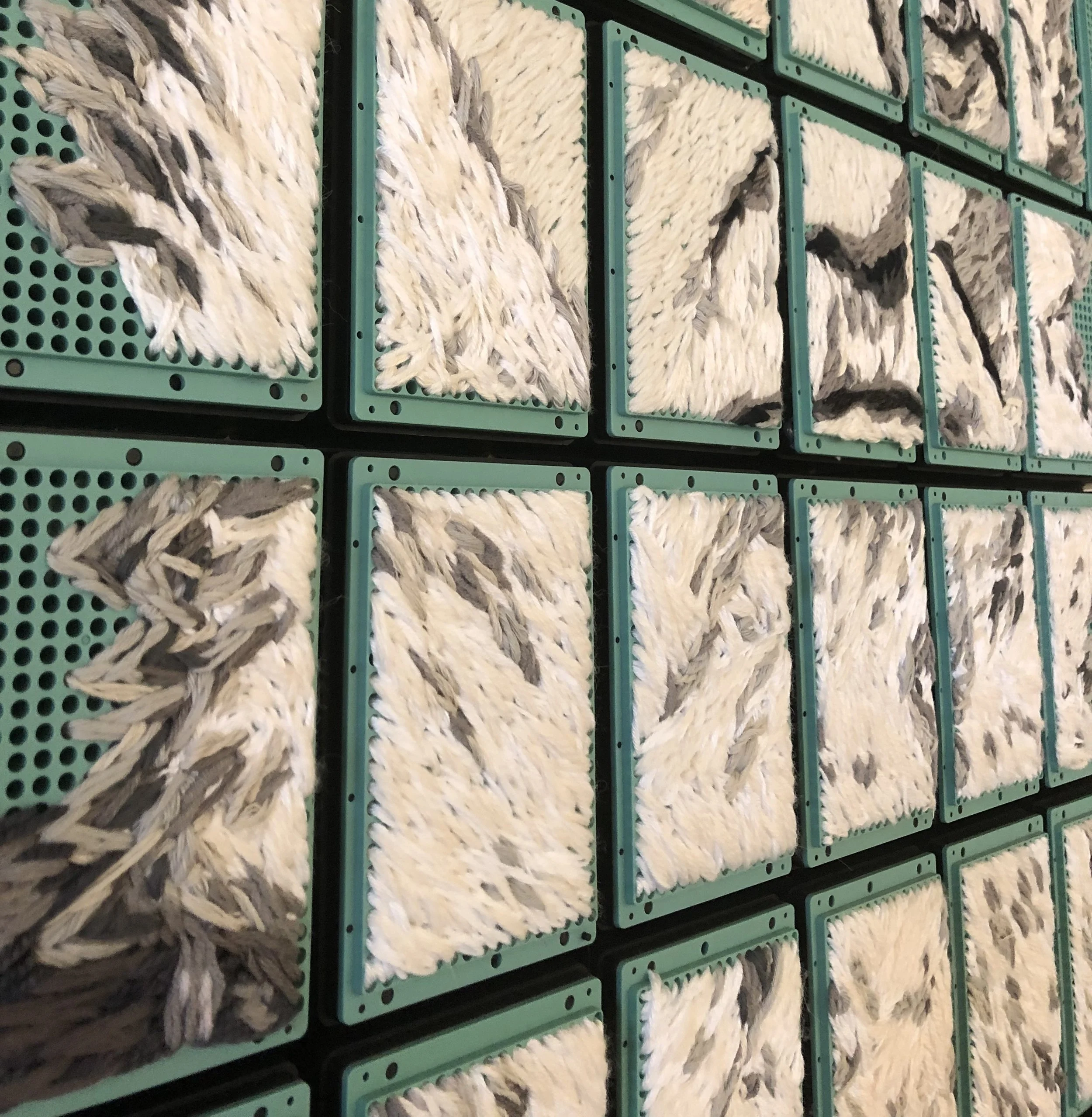
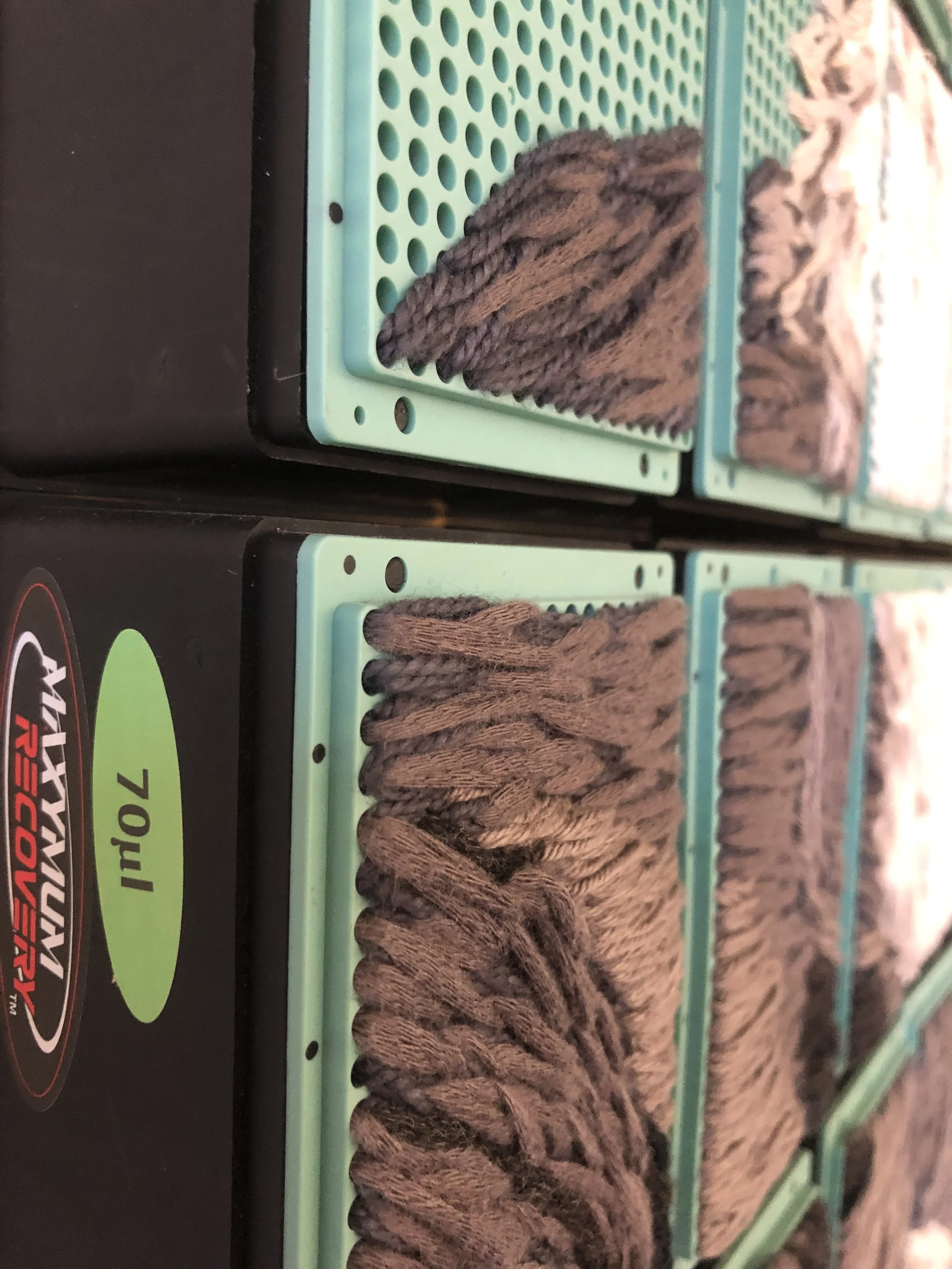
In Evolutionary Thread, i transformed the repetitive grid of plastic filter-tip holder boxes into a portret of Charles Darwin. Each individual box has a removable top plate with a precise grid of 384 holes. Once filled with sterile tips, now utilized as a frame for embroidery. Using a variety of wool types and textures, I ‘stitched’ Darwin’s portret into these plastic matrices.
Following its public debut at Beatrixoord UMCG, the work generated significant interest and was recently acquired for a private collection.
Her Material Matters
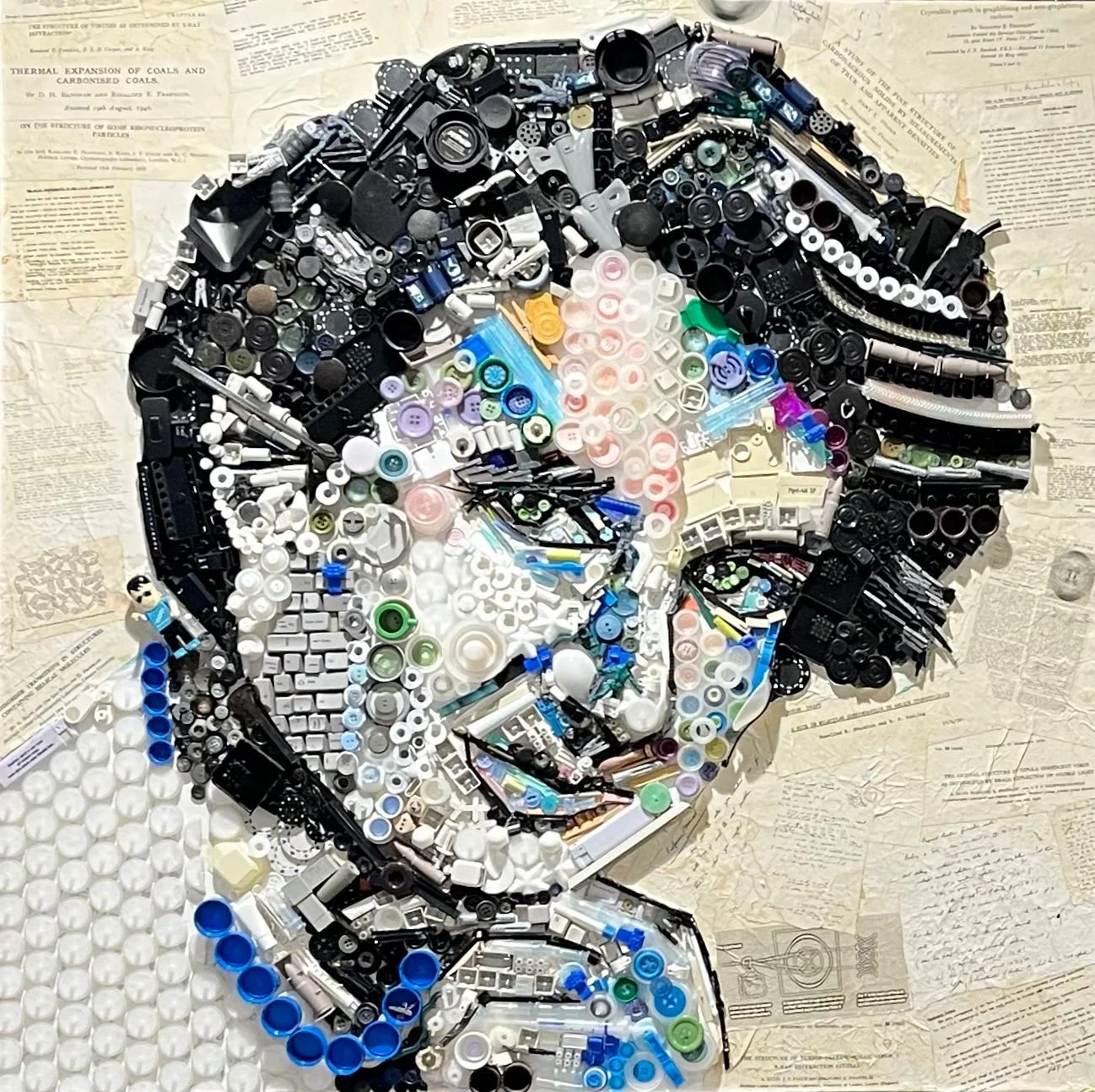
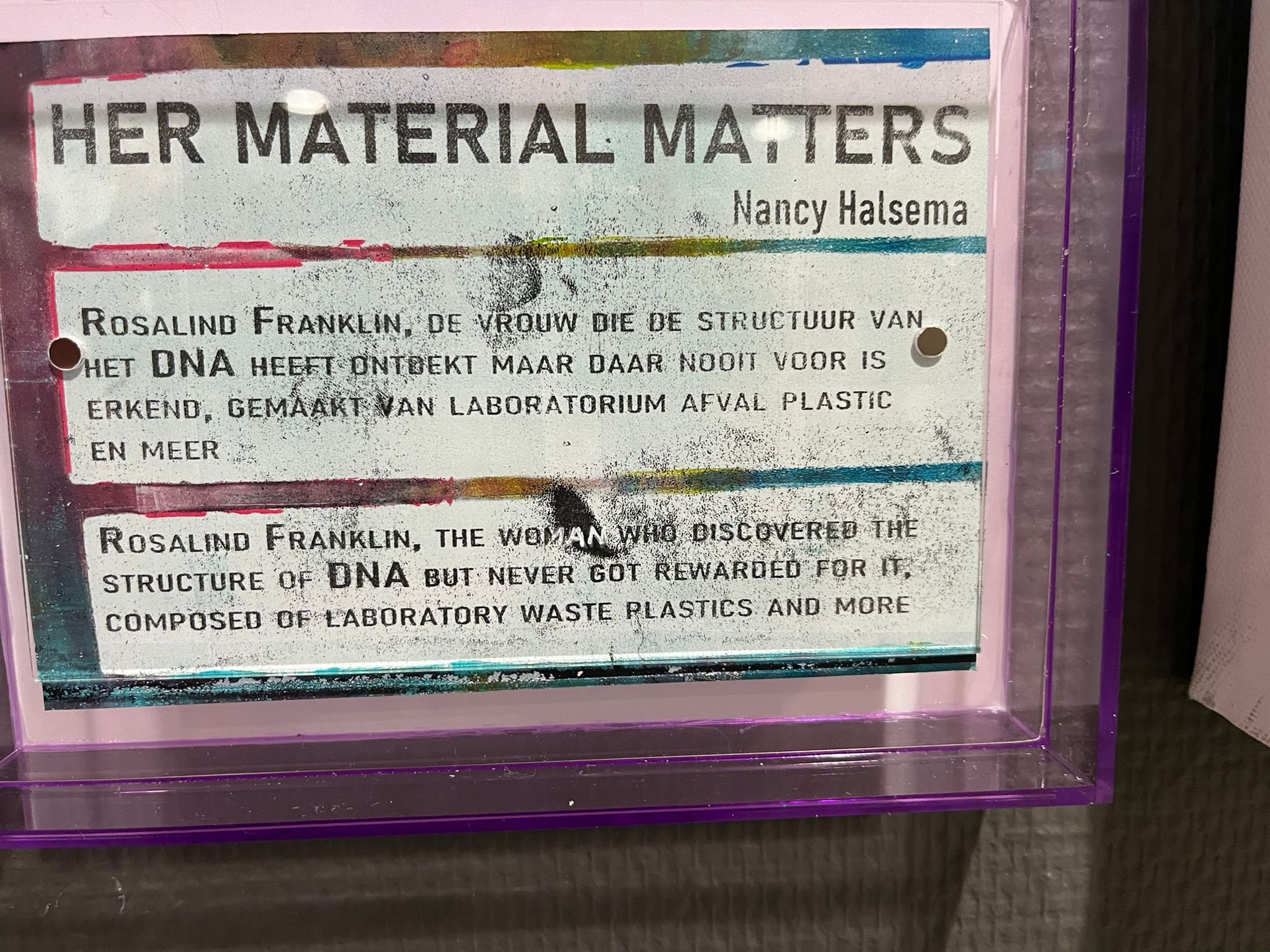
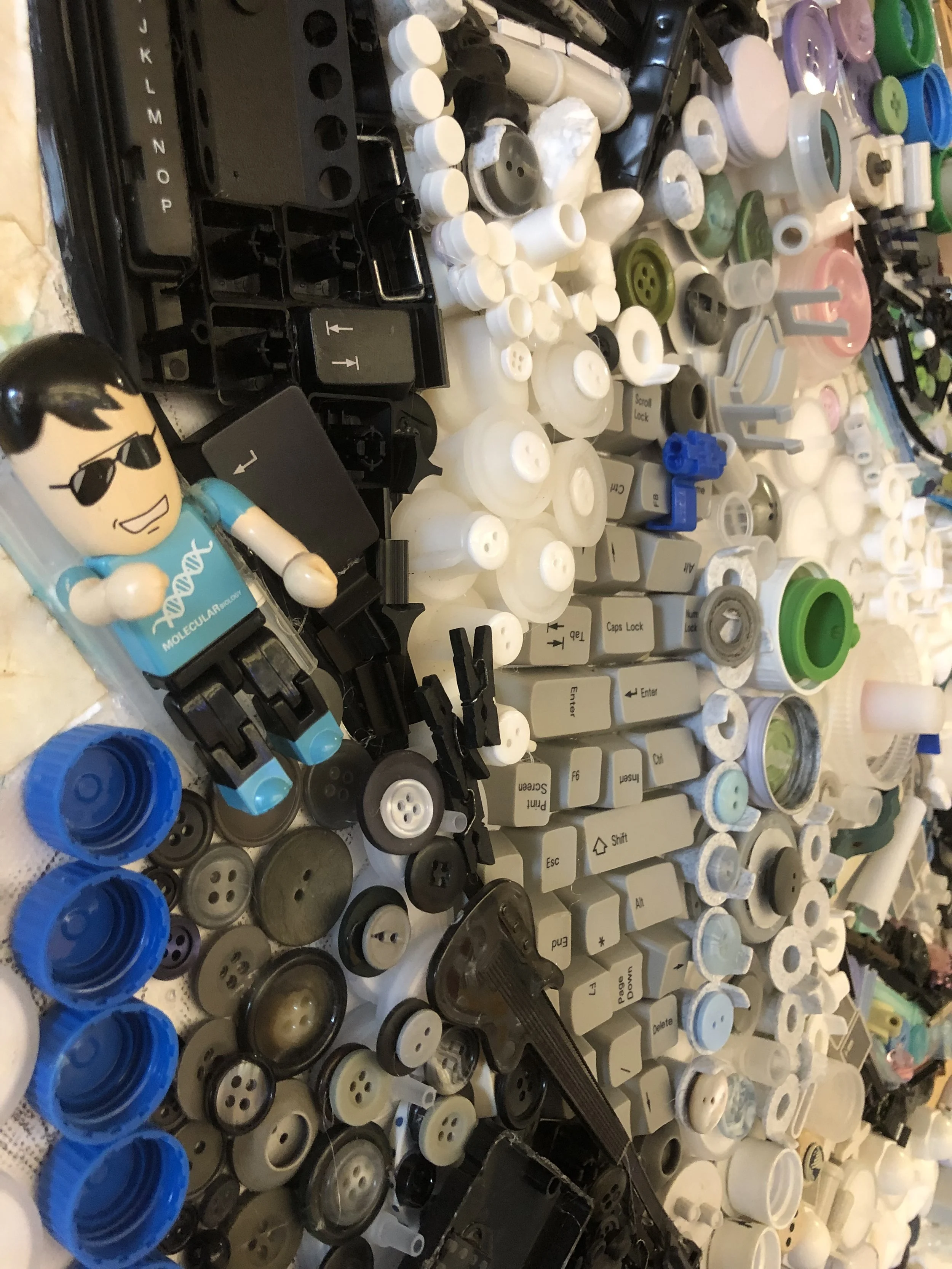
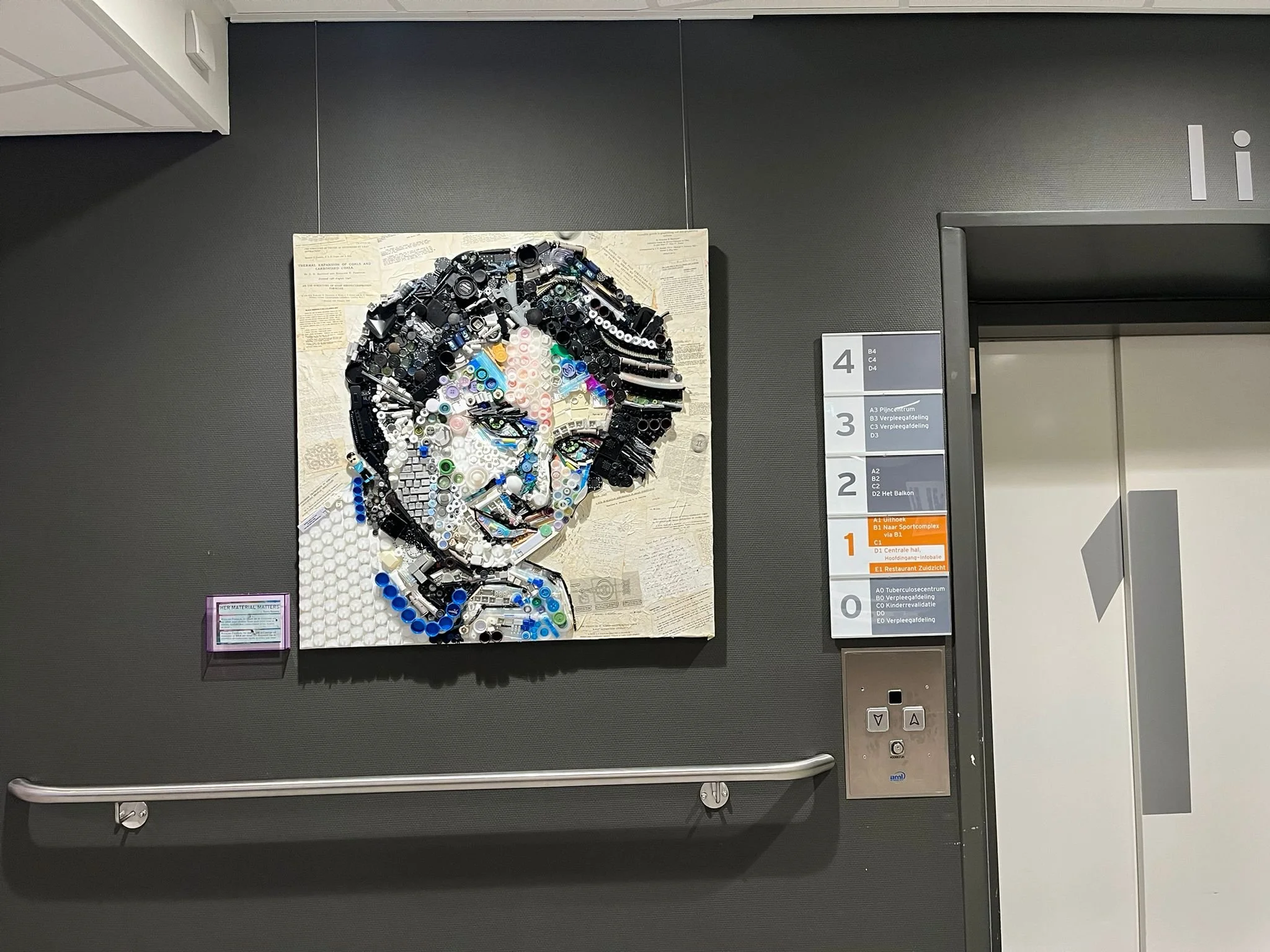
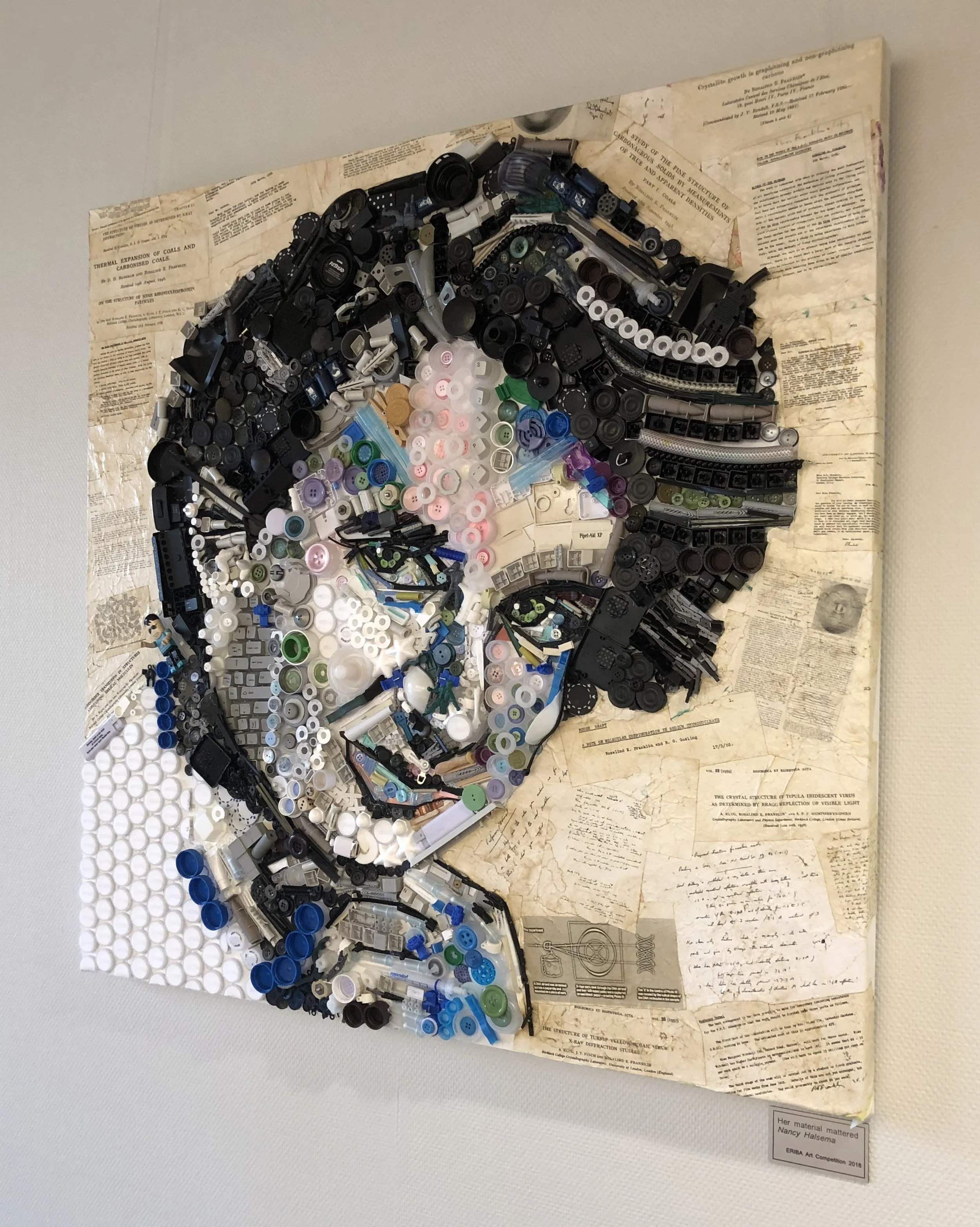
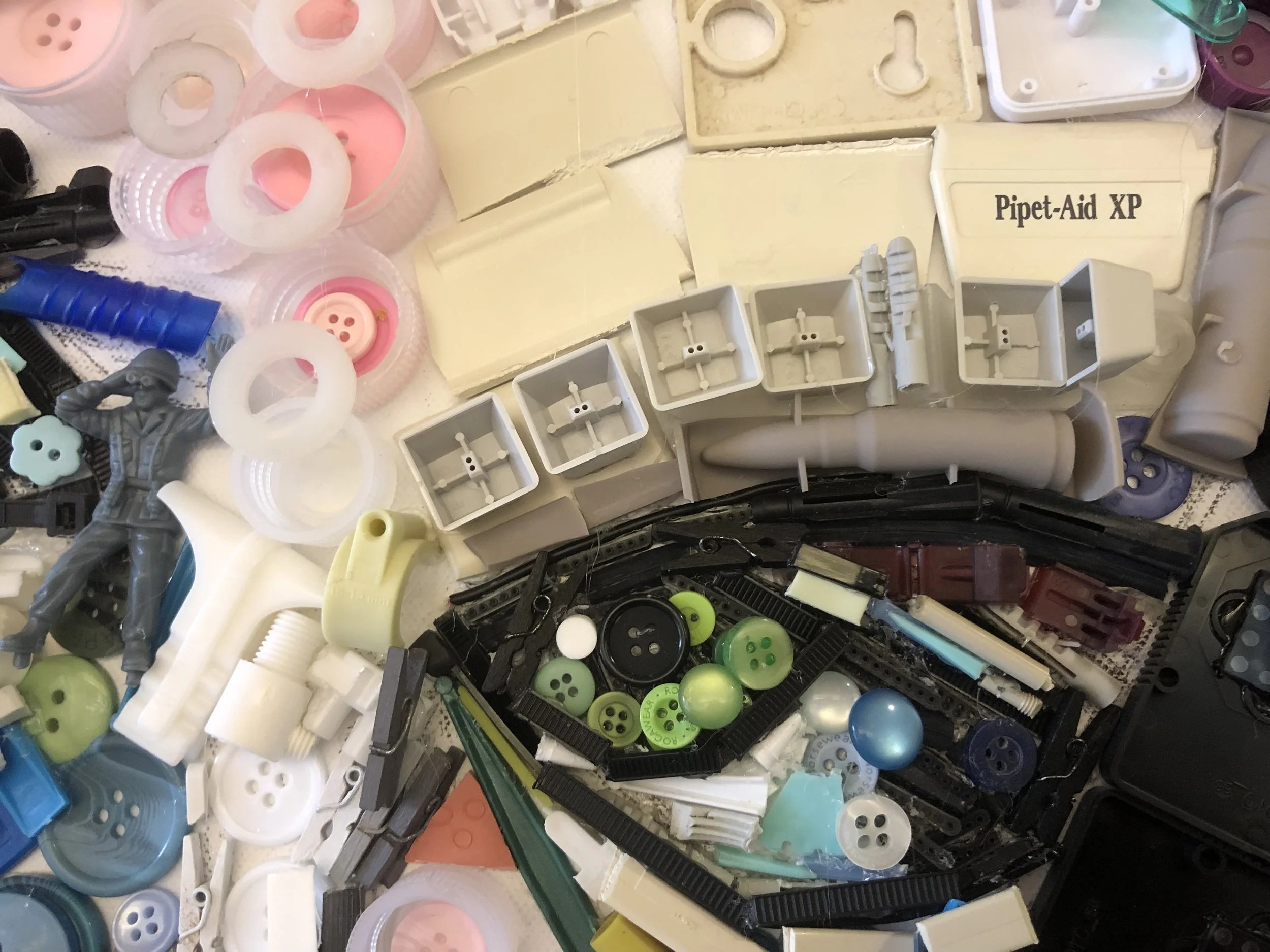
This work is a tribute to Rosalind Franklin, the scientist whose important work towards the discovery of the DNA double helix got almost no credit during her lifetime. Therefore, next to sustainability tis work is as well a reminder to brilliant women in science who often did not get awarded.
The portrait is constructed from laboratory waste and other discarded plastics which is also material that once mattered and now still does in this artwork. Surrounding the portrait is an archive of her own words: reproductions of her lab notes, personal letters, and scientific papers. The portret is bought by Beatrixoord UMCG in Haren and is on display in the main entrance hall.
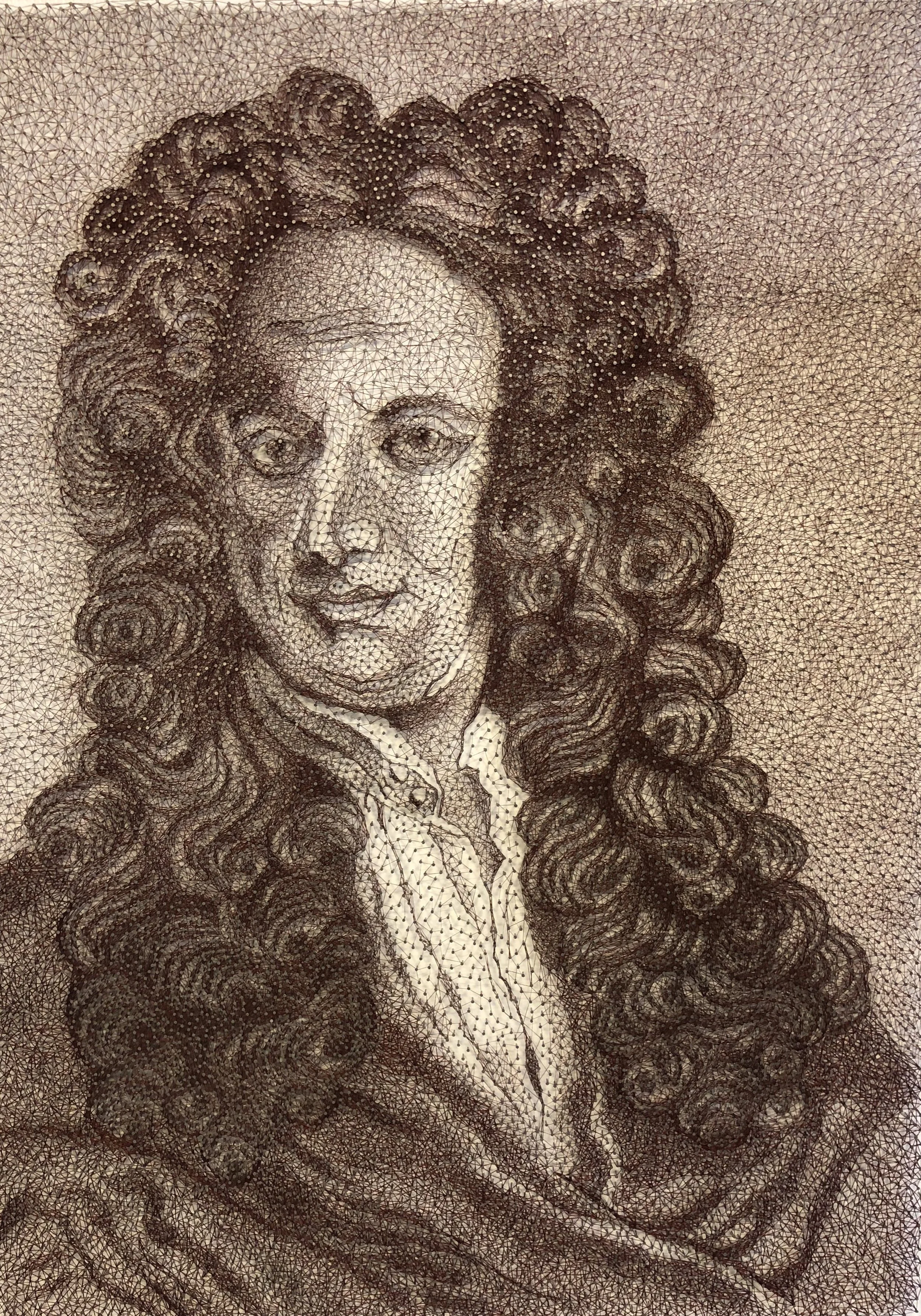
Nailed with his Force
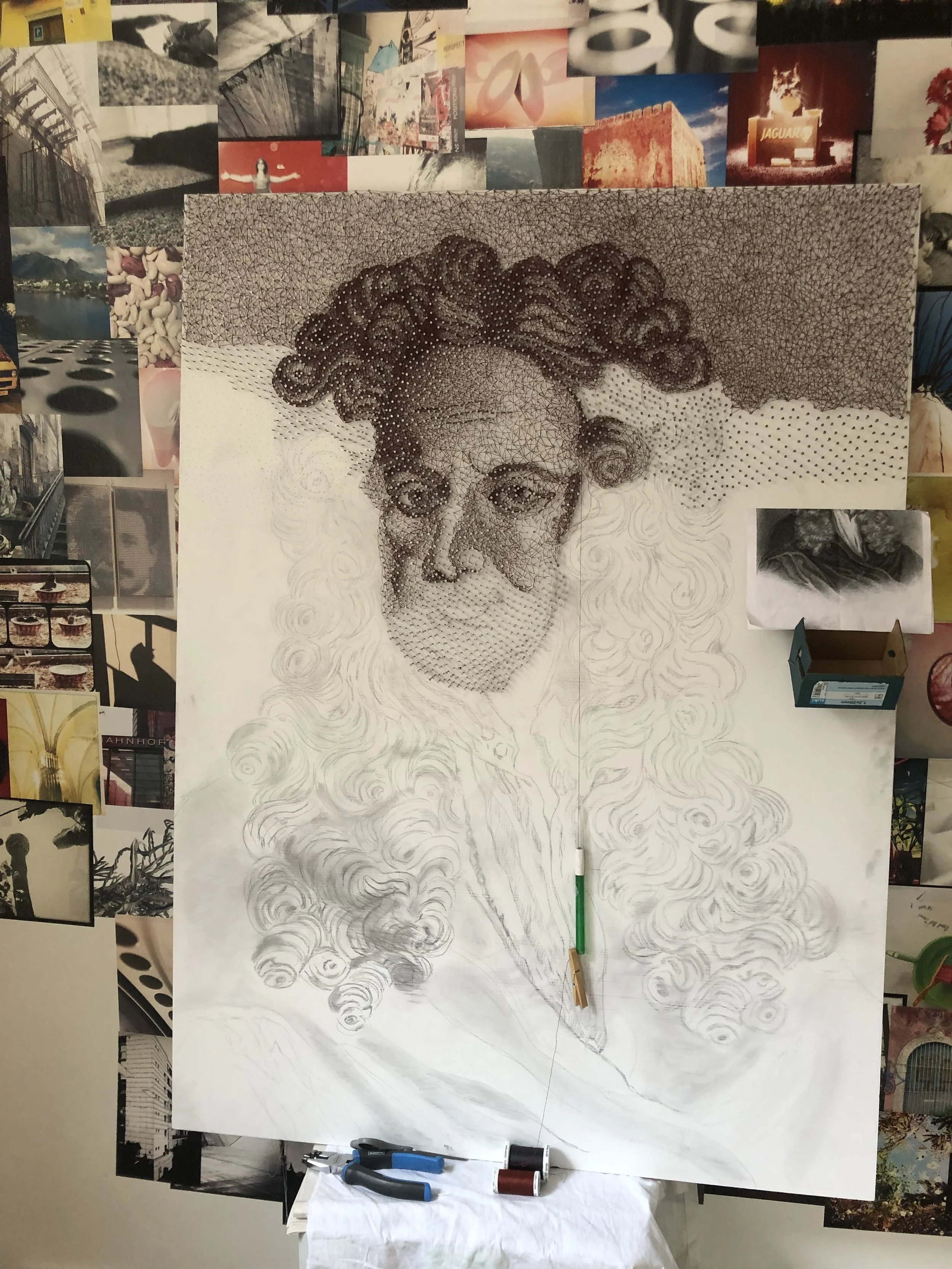
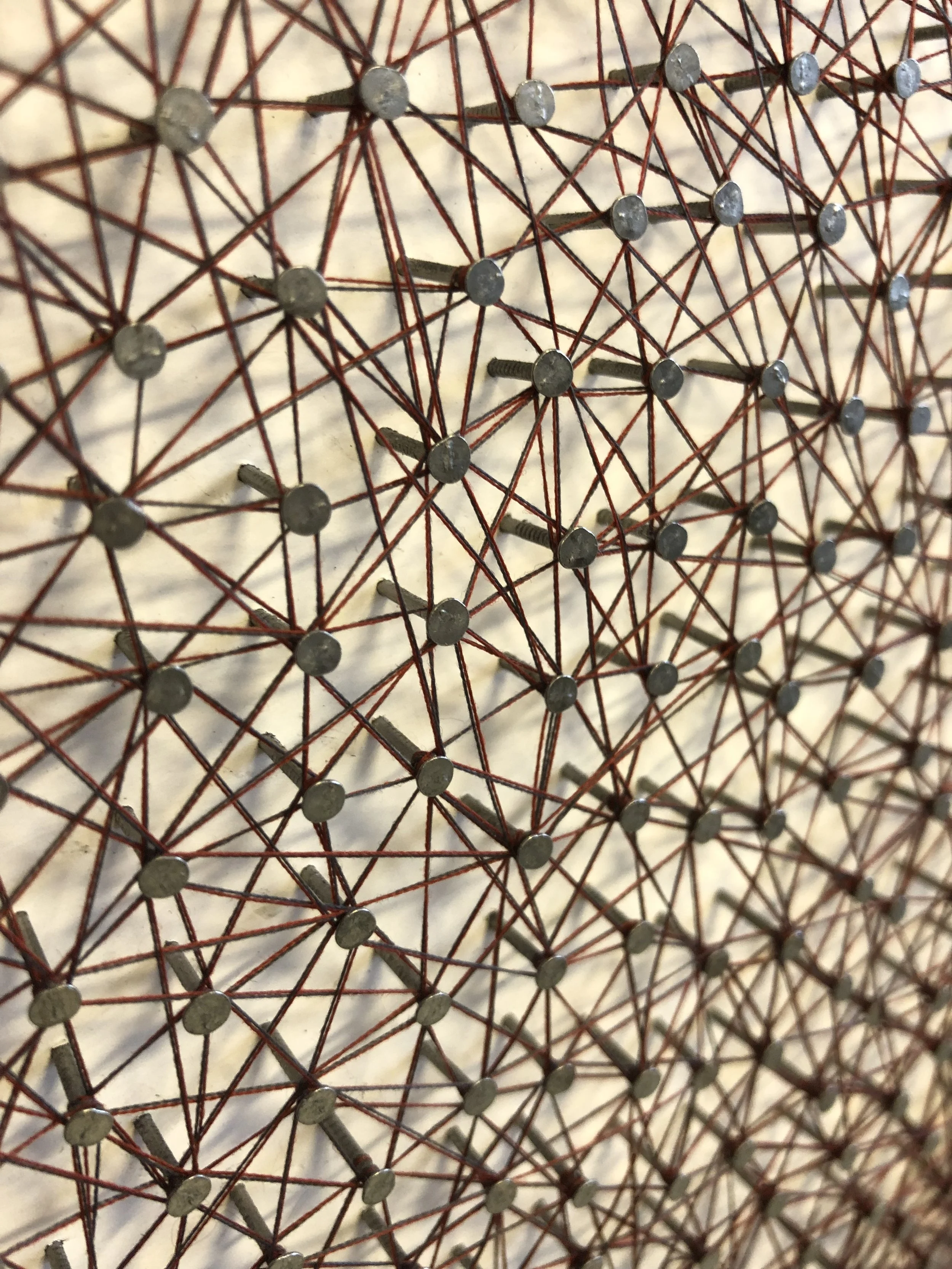
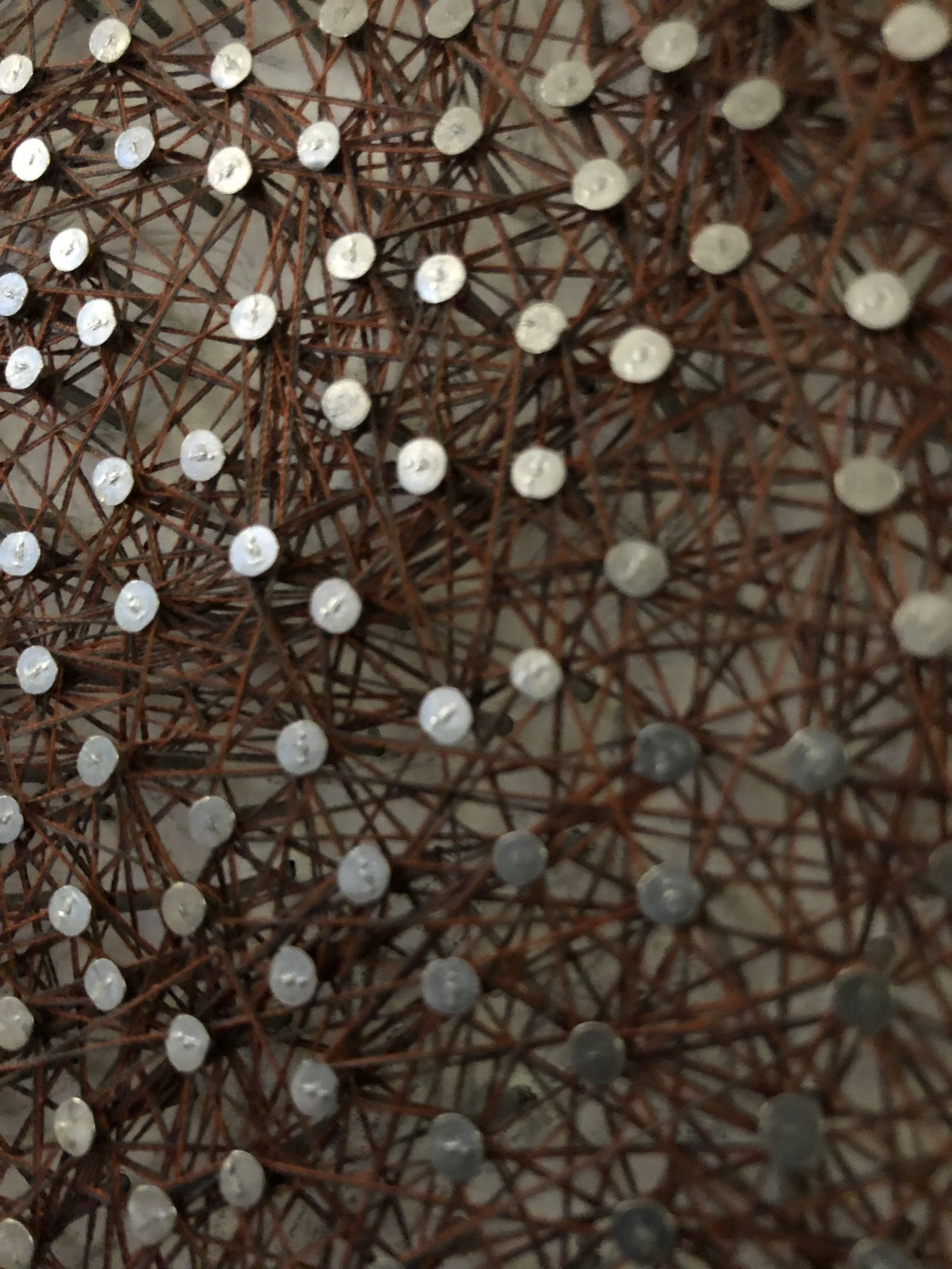
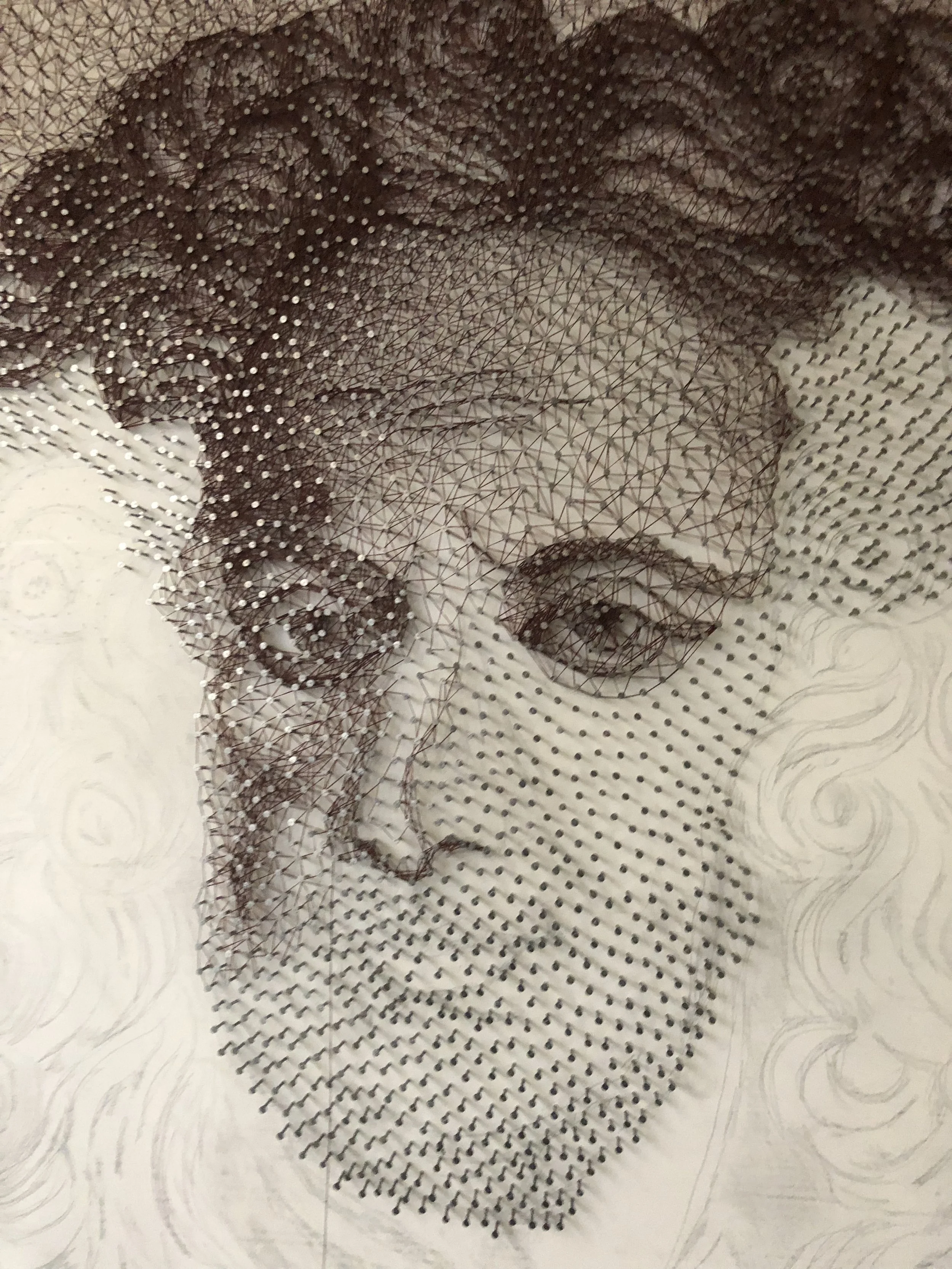
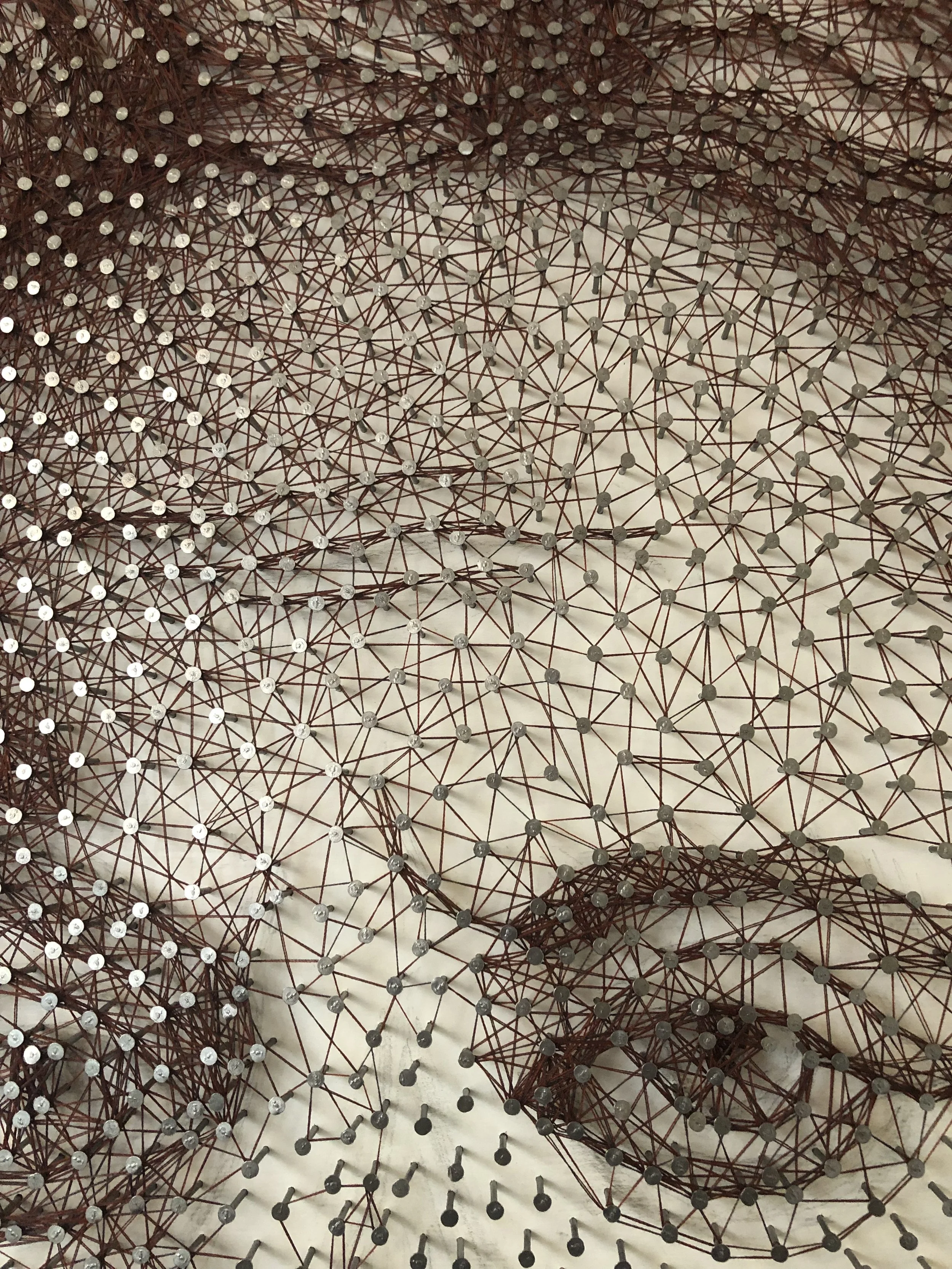
In Nailed with his Force, i constructed a portrait of Isaac Newton using over a kilometer of continuous sewing thread, woven through thousands of nails pressed into the board with the force he was investigating in his time. I created more or less crowded areas for a complex web of light and shadow. Walid Daş made me a custom tool to ensure every nail was driven into the board at a perfectly uniform height, including a tool to easily wave the thread in a continuous mode.
Guided Spots
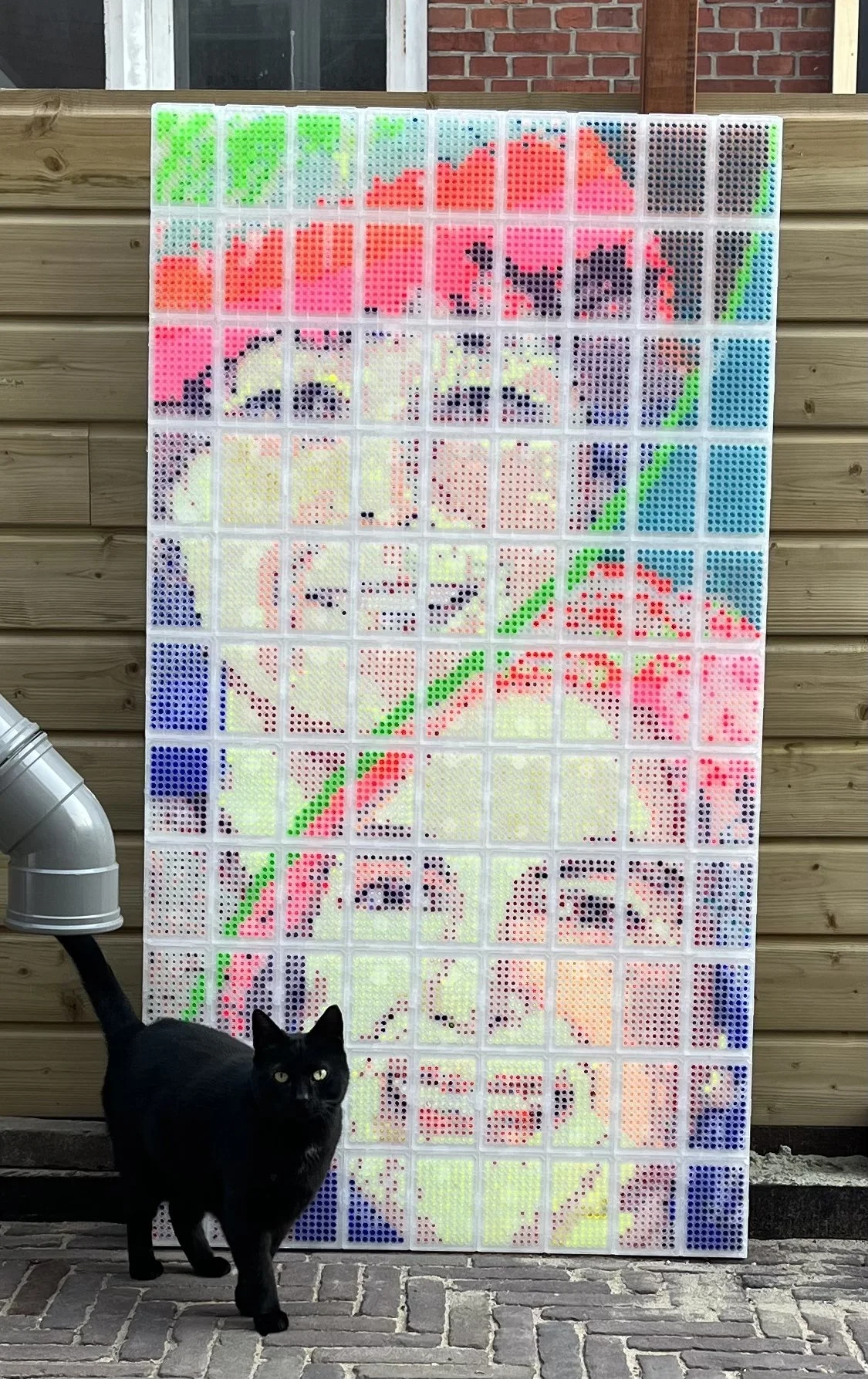
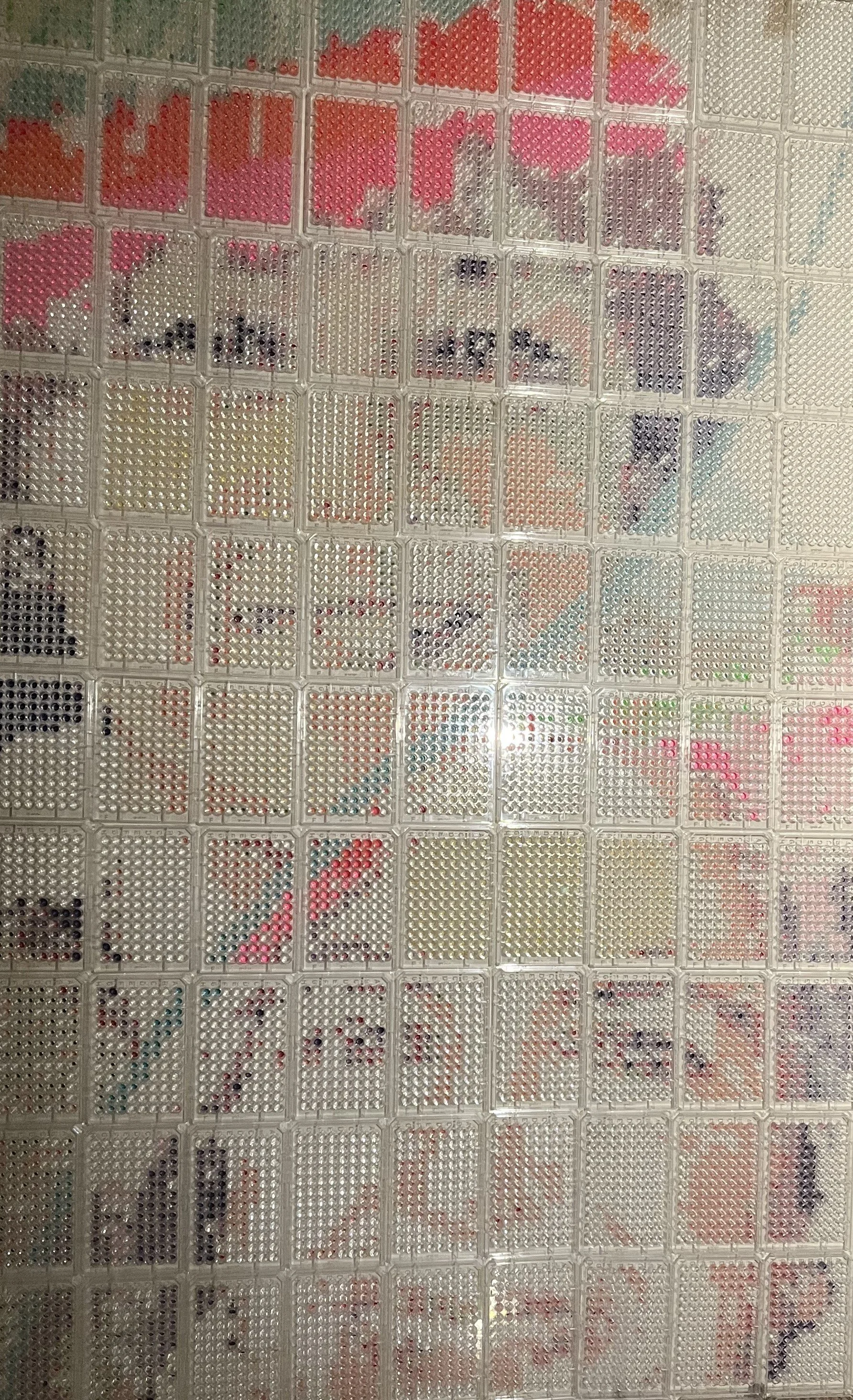
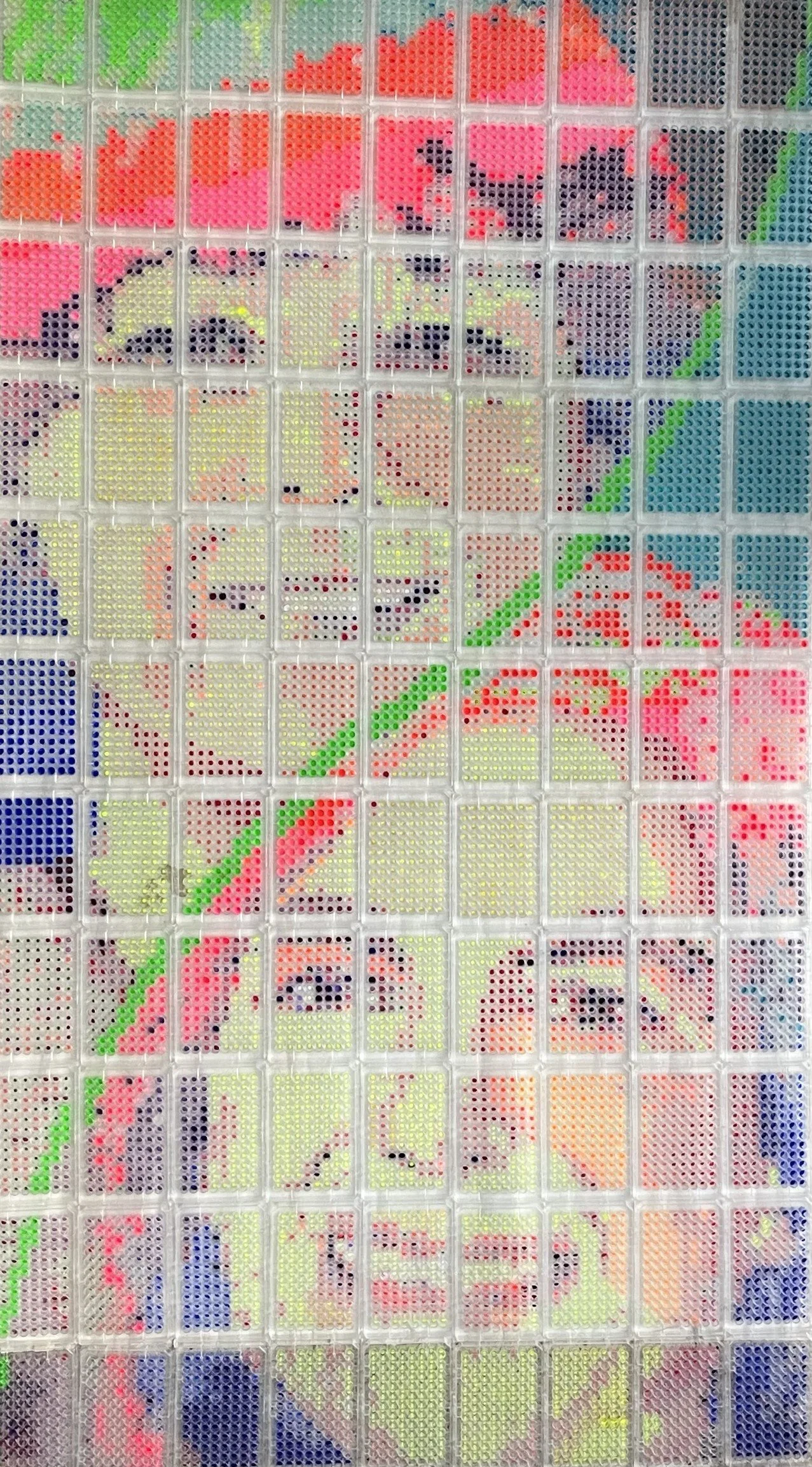
Guided Spots show Emmanuelle Charpentier and Jennifer Doudna, the two scientists awarded the 2020 Nobel Prize in Chemistry for transforming the field of DNA editing. Their work introduced a guided molecular system, often described as a genetic scissor, capable of targeting exact locations within DNA, rather than random locations, to edit the DNA at that place.
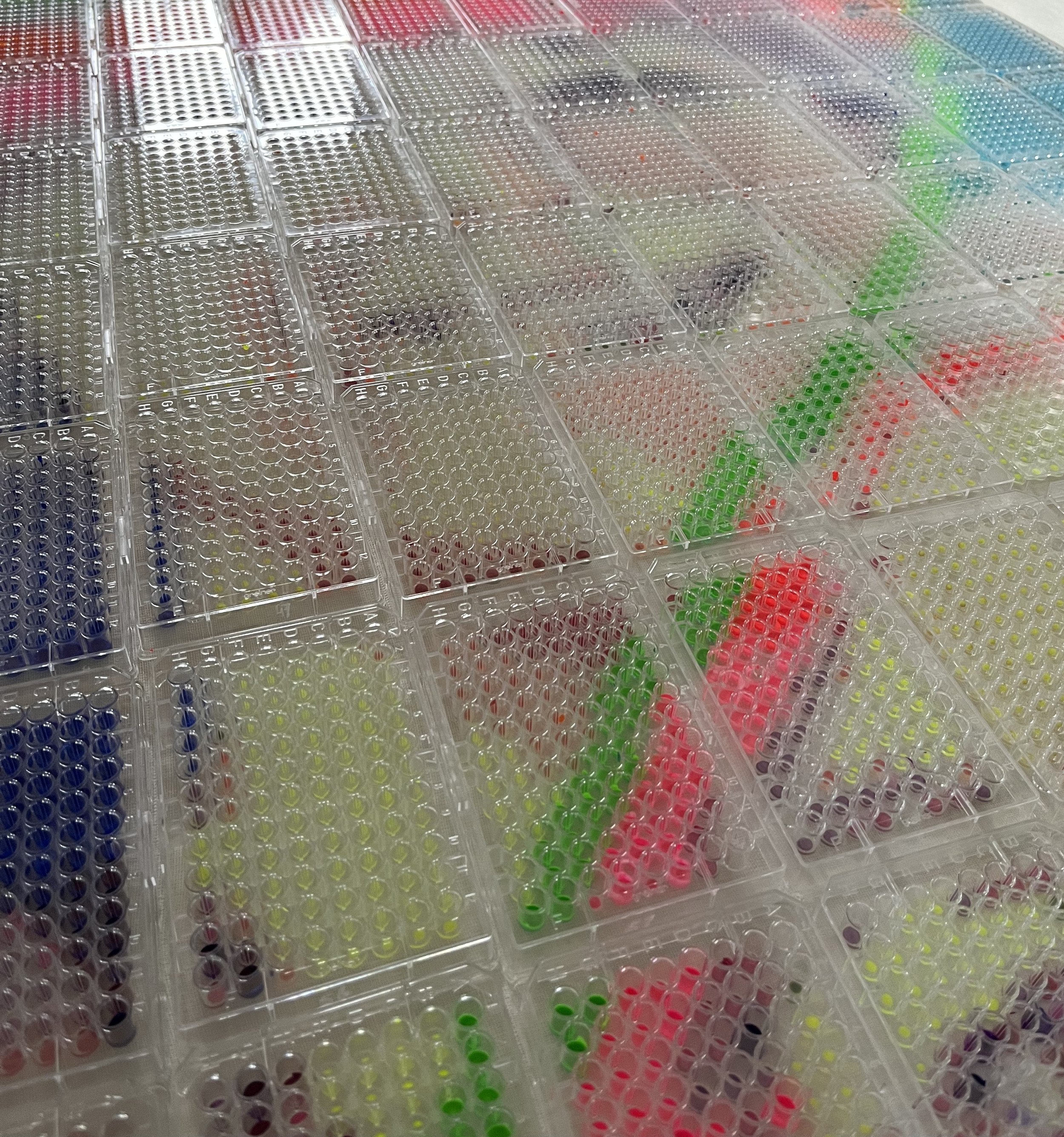
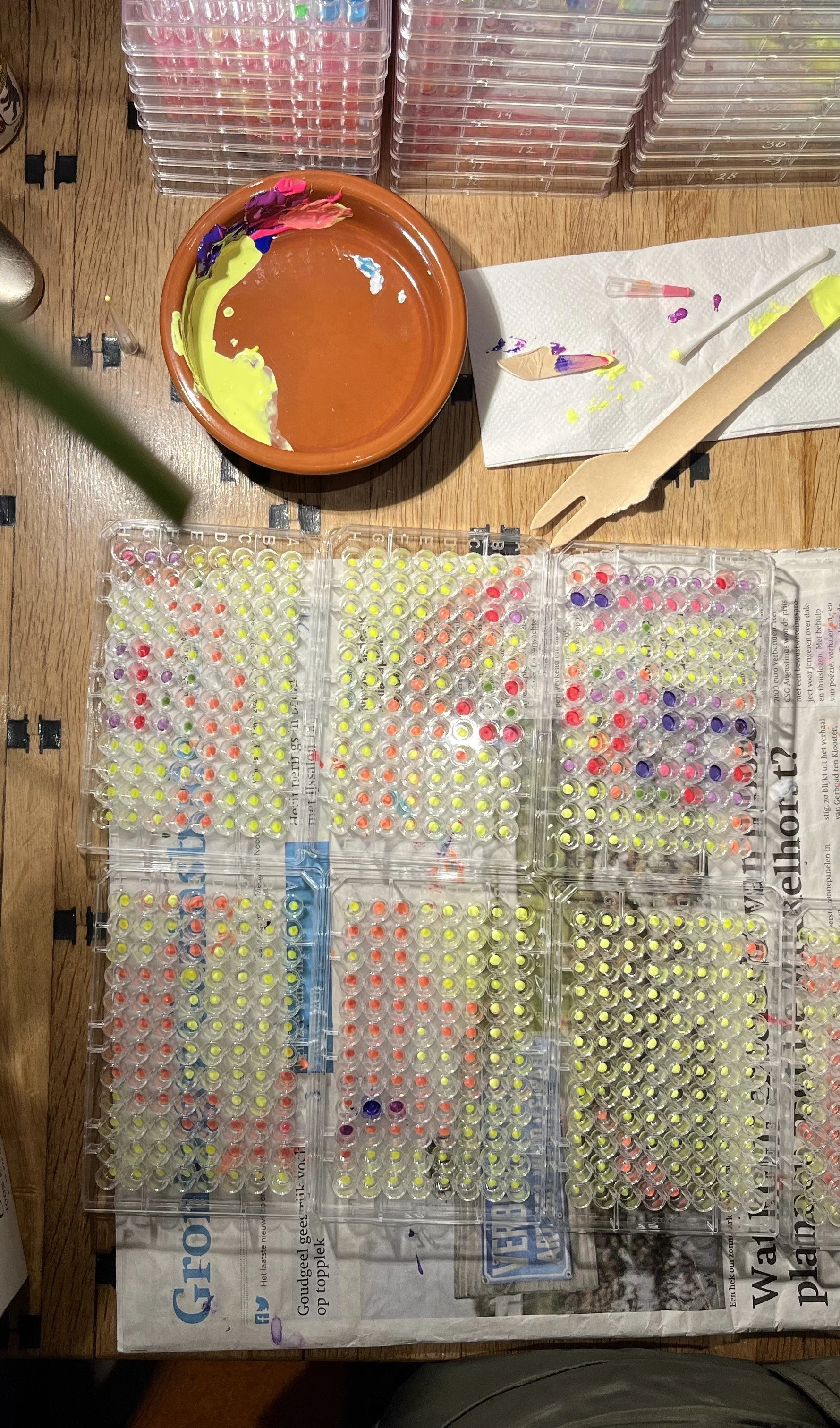
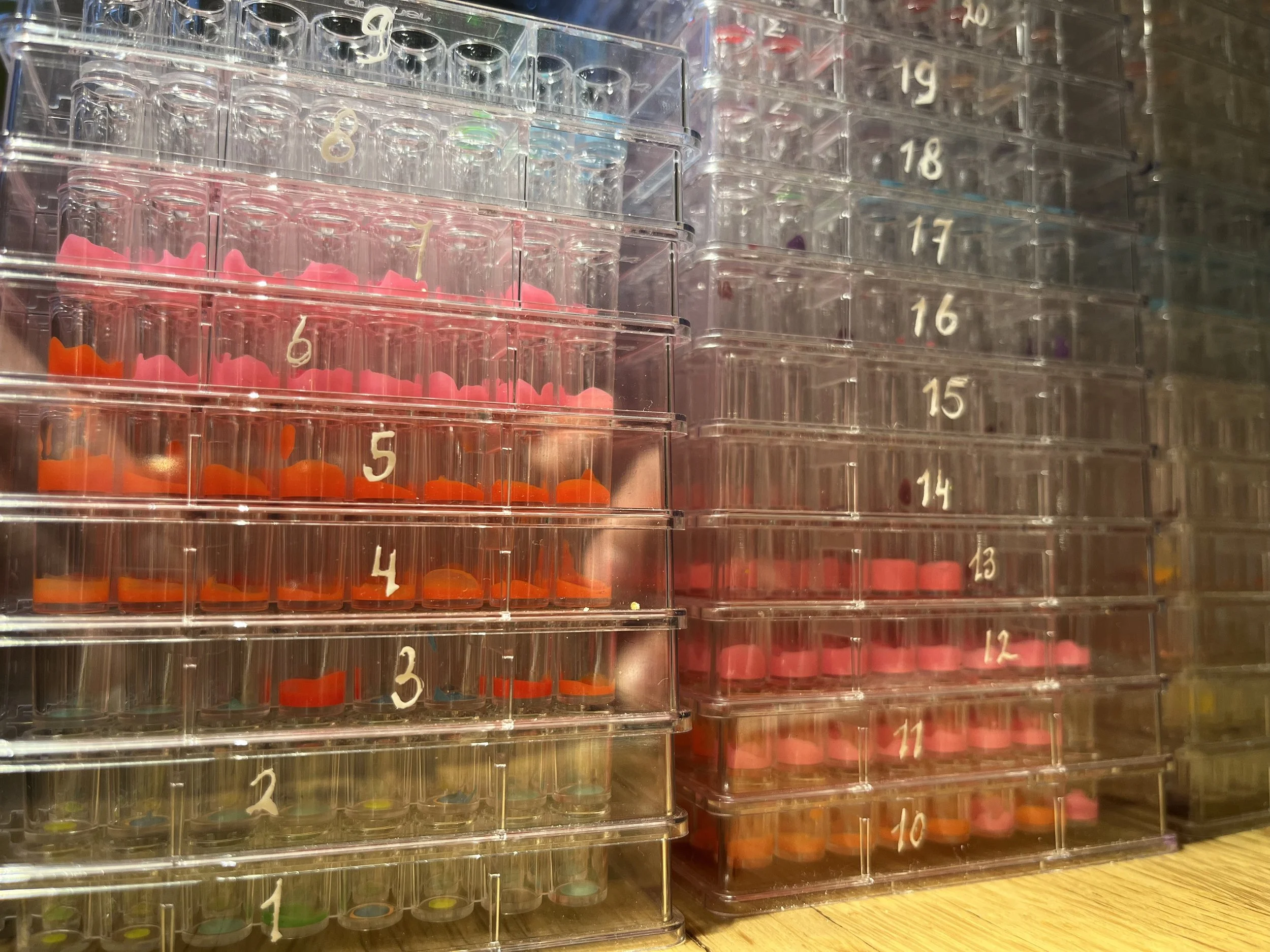
The artwork is composed of merely fluorescent acrylic paint dots arranged across a grid of ninety-nine 96-well laboratory reaction plates. Displayed in the ERIBA building, where a DNA editing facility is housed, the mosaic portraits are a tribute to women in science.